

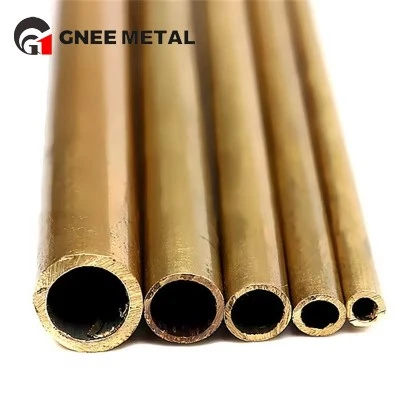
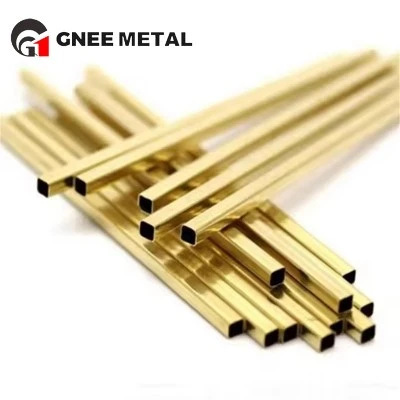
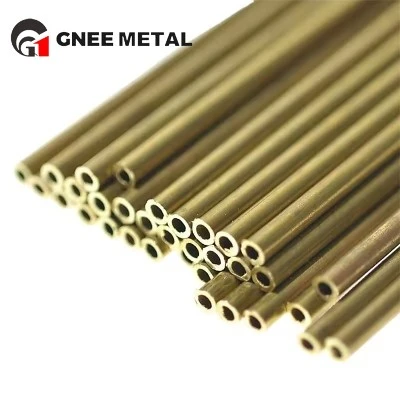
As a metal material widely used in many fields, H62 brass tube occupies an important position in industrial production by virtue of its unique physical and chemical properties. This article will provide a comprehensive introduction to H62 brass tube in terms of its characteristics, chemical composition, mechanical properties, heat treatment specifications, main applications and comparison with other brasses, with a view to providing valuable reference for practitioners in related fields.
Characteristics of H62 brass tube
H62 brass tube is known for its good mechanical properties. In the hot state, it exhibits excellent plasticity and can be easily processed in a variety of deformations; while in the cold state, although the plasticity is slightly inferior to that of the hot state, it still meets most of the processing needs. This material also has good machinability, whether it is turning, milling or drilling, can obtain better surface quality and processing efficiency. In addition, H62 brass tubing is easy to fiber weld and solder, providing convenience for connection and assembly.
In terms of corrosion resistance, H62 brass tubes show a certain degree of corrosion resistance, but are prone to corrosion rupture in some specific environments, such as water or air containing corrosive media. Therefore, when selecting and using, comprehensive consideration needs to be made according to the specific application environment.
Chemical composition
The chemical composition of H62 brass tube is the basis of its performance. According to the national standard GB/T 1527-1997, the main components of H62 brass pipe include copper (Cu) and zinc (Zn), of which the copper content ranges from 60.5% to 63.5%, and the rest is zinc. In addition, it also contains a small amount of impurity elements, such as lead (Pb) not more than 0.08%, iron (Fe) not more than 0.15%, as well as boron (P), beryllium (Sb), bismuth (Bi), and other impurity elements, and their contents are strictly controlled to ensure the overall performance of the material.
Mechanical properties
The mechanical properties of H62 brass tube is the key to whether it can meet the requirements in practical applications. According to the test, the tensile strength of H62 brass pipe is not less than 390MPa, which means that it has a strong resistance when subjected to tensile load. In addition, its yield strength, elongation and other mechanical property indexes are also in line with the requirements of the relevant standards, which provides a guarantee for the stable use of the material in various stress states.
Heat treatment specification
Heat treatment is an important means of improving the performance of H62 brass tube. In the thermal processing process, the processing temperature of H62 brass tube is usually controlled between 650 ℃ and 850 ℃ to ensure that the material can be smoothly deformed without cracking. Annealing treatment is used to eliminate the internal stresses generated in the processing of materials, improve the plasticity and toughness of materials. The annealing temperature is generally between 600℃ and 700℃, while the low-temperature annealing temperature for the elimination of internal stress is controlled at 270℃ to 300℃. Through a reasonable heat treatment process, the performance of H62 brass tube can be further optimized to meet different needs of use.
Main application
With its excellent performance, H62 brass tube is widely used in many fields. In the field of electronics and electrical appliances, H62 brass tube is often used to make various connectors, terminals, lead frames and so on. Its good electrical conductivity and processability make these components capable of stably transmitting current in circuits while maintaining a low resistance loss. In addition, H62 brass tube also has good anti-oxidation performance, which can extend the service life of electronic components to a certain extent.
In the field of plumbing and sanitary ware, H62 brass tube also shows its unique advantages. Because of its good water resistance and corrosion resistance, it is often used in the manufacture of faucets, valves, fittings and so on. These products need to withstand a certain degree of water pressure and corrosive media erosion in the process of use, and H62 brass tube is able to meet these requirements, to ensure the smooth flow of the waterway and safety.


