

What Is ASTM B466?
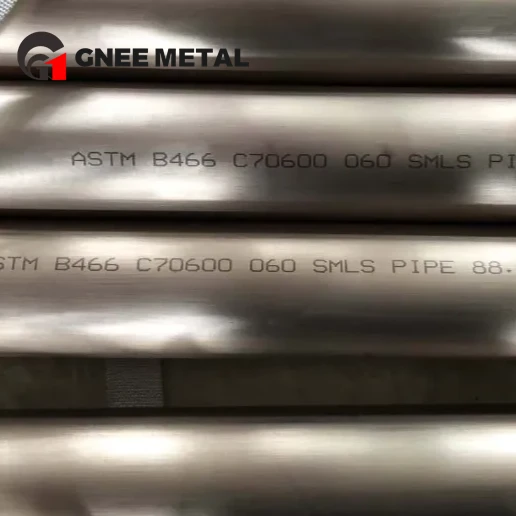
ASTM B466/B466M is the Standard Specification for Seamless Copper-Nickel Pipe and Tube. It covers seamless copper-nickel products in straight lengths for general engineering applications.
The standard specifies requirements related to:
Copper-nickel alloy grades and chemical composition
Manufacturing processes and product conditions
Tensile properties and hardness
Pipe and tube dimensions and tolerances
Expansion, flattening, and eddy-current testing
Product marking and inspection requirements
ASTM B466 is commonly referenced when purchasing copper-nickel pipes for seawater piping, marine equipment, condensers, and industrial cooling systems.

ASTM B466 vs ASTM B467
These two standards cover different manufacturing types of copper-nickel piping products.
| Standard | Product Type | Manufacturing Method | Typical Applications |
|---|---|---|---|
| ASTM B466/B466M | Seamless copper-nickel pipe and tube | Seamless manufacturing | Marine piping, heat exchangers, industrial piping |
| ASTM B467 | Welded copper-nickel pipe | Forming and welding | Marine piping, seawater systems, industrial pipelines |
Request ASTM B466 Copper Nickel Pipe Quotation
Copper Nickel Grades Covered by ASTM B466
ASTM B466/B466M covers seven copper alloy UNS grades. They include conventional copper-nickel alloys and modified grades intended for subsequent welding.
| UNS Grade | Alloy Type | Nominal Composition | Main Characteristics |
|---|---|---|---|
| C70400 | 95/5 Cu-Ni | 95% Copper, 5% Nickel | Low-nickel copper alloy |
| C70600 | 90/10 Cu-Ni | 90% Copper, 10% Nickel | Good seawater corrosion resistance |
| C70620 | Modified 90/10 Cu-Ni | Copper-nickel, modified for welding | Intended for subsequent welding |
| C71000 | 80/20 Cu-Ni | 80% Copper, 20% Nickel | Intermediate nickel content |
| C71500 | 70/30 Cu-Ni | 70% Copper, 30% Nickel | Higher nickel content and corrosion resistance |
| C71520 | Modified 70/30 Cu-Ni | Copper-nickel, modified for welding | Intended for subsequent welding |
| C72200 | Cu-Ni-Cr | Copper-nickel-chromium alloy | Chromium-containing copper-nickel alloy |
Common ASTM B466 Grades for Industrial Purchasing
C70600 Copper Nickel Pipe (90/10)
C70600 is widely used in marine and seawater applications. Its combination of corrosion resistance, mechanical properties, and fabrication characteristics makes it suitable for:
Shipboard seawater piping
Firemain systems
Condenser water lines
Desalination equipment
Marine cooling systems
C71500 Copper Nickel Pipe (70/30)
C71500 contains a higher nickel proportion than C70600. It is selected for applications requiring higher strength and good resistance to seawater corrosion and erosion-corrosion.
Typical applications include:
Marine seawater piping
Heat exchanger systems
Condenser equipment
Offshore industrial piping
ASTM B466 Chemical Composition Requirements
Chemical composition determines the material identity and contributes to the corrosion resistance and mechanical properties of copper-nickel alloys.
The following table shows the main compositional differences between two commonly purchased grades.
| Element | C70600 | C71500 |
|---|---|---|
| Copper (Cu) | Remainder | Remainder |
| Nickel + Cobalt (Ni + Co) | 9.0–11.0% | 29.0–33.0% |
| Iron (Fe) | 1.0–1.8% | 0.40–1.0% |
| Manganese (Mn) | 1.0% max. | 1.0% max. |
Why Are Nickel and Iron Important in Copper Nickel Pipes?
Nickel: Improves the corrosion resistance and mechanical strength of copper-nickel alloys.
Iron: Helps improve resistance to flowing seawater and erosion-corrosion.
Manganese: Acts as an alloying addition and contributes to the overall alloy properties.
Mechanical Properties of ASTM B466 Copper Nickel Pipes
ASTM B466 specifies mechanical property requirements according to the alloy grade, product form, size, and temper.
The main mechanical properties considered during inspection include:
| Property | Description | Importance for Buyers |
|---|---|---|
| Tensile Strength | Maximum tensile stress before fracture | Evaluates the pipe's resistance to pulling forces |
| Yield Strength | Stress at which permanent deformation begins | Important for structural and pressure-related design |
| Elongation | Ability to deform before fracture | Indicates ductility |
| Rockwell Hardness | Resistance to localized indentation | Helps verify material condition |
ASTM B466 Standard Tempers
The standard includes different temper conditions for seamless copper-nickel pipes and tubes.
| Temper Code | Temper Designation | Description |
|---|---|---|
| O60 | Soft Annealed | Annealed condition with good ductility |
| H55 | Light Drawn | Light cold-worked condition |
| H80 | Hard Drawn | Higher cold-worked strength |
| HE80 | Hard Drawn and End Annealed | Hard-drawn product with end annealing |
Light Drawn vs Soft Annealed Copper Nickel Pipes
This distinction is important when purchasing C70600 and C71500 pipes.
| Comparison | Light Drawn (H55) | Soft Annealed (O60) |
|---|---|---|
| Processing | Cold drawn | Annealed |
| Strength | Generally higher | Generally lower |
| Ductility | Lower than soft annealed | Higher |
| Fabrication | Suitable for applications requiring greater strength | Suitable for applications requiring more forming flexibility |
| Typical Selection | Piping with specified light-drawn condition | Applications requiring greater ductility |
Buyer Tip: Do not specify only the alloy grade. Include the required temper condition in the purchase order, especially when the project specifies Light Drawn or Annealed copper-nickel pipes.
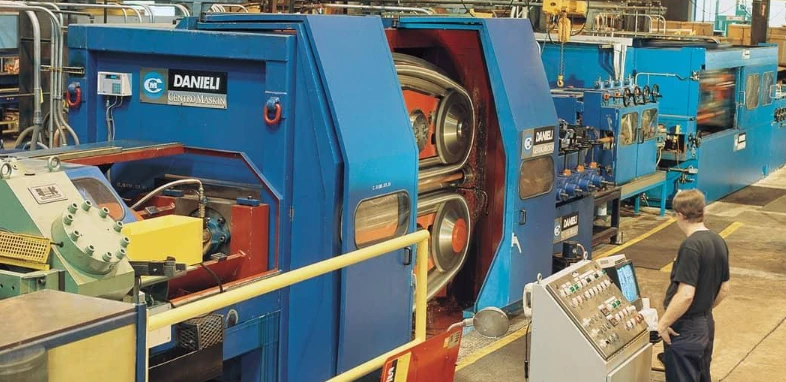
Light Drawn and Annealed Copper Nickel Pipe Production
ASTM B466 Copper Nickel Pipe Dimensions and Tolerances
Nominal Pipe Size and Outside Diameter
Copper-nickel pipes are commonly ordered using nominal pipe sizes (NPS).
However, NPS is not the actual measured outside diameter. Each nominal size corresponds to a defined outside diameter under the applicable dimensional system.
Examples of commonly specified sizes include:
| Nominal Pipe Size | Actual Outside Diameter |
|---|---|
| 1/2 in | 0.840 in (21.34 mm) |
| 3/4 in | 1.050 in (26.67 mm) |
| 1 in | 1.315 in (33.40 mm) |
| 1-1/2 in | 1.900 in (48.26 mm) |
| 2 in | 2.375 in (60.33 mm) |
| 3 in | 3.500 in (88.90 mm) |
| 4 in | 4.500 in (114.30 mm) |
These are common NPS outside diameters. The applicable product dimensional requirements and tolerances must still be confirmed for the ordered size.
Wall Thickness and Pipe Schedule
Wall thickness directly affects the pipe's internal diameter, weight, and pressure-design suitability.
Common purchasing descriptions include:
Schedule 40
Schedule 80
Regular Wall
Specific nominal wall thickness
For example, a 2-inch NPS pipe has an outside diameter of 2.375 inches. Its inside diameter changes according to the specified wall thickness.
The basic relationship is:
Inside Diameter (ID) = Outside Diameter (OD) − 2 × Wall Thickness
| Item | Example |
|---|---|
| Nominal Pipe Size | 2 in |
| Outside Diameter | 2.375 in |
| Wall Thickness | 0.154 in |
| Calculated Inside Diameter | 2.067 in |
This is an illustrative dimensional example, not a declaration that every 2-inch ASTM B466 pipe has this wall thickness.
Dimensional Tolerances
Wall Thickness Tolerances (±)
| Nominal Wall Thickness | OD Over 1–2 in (25–50 mm) | OD Over 2–4 in (50–100 mm) |
|---|---|---|
| 0.082–0.119 in (2.1–3.0 mm) | 0.0065 in (0.17 mm) | 0.009 in (0.23 mm) |
| Over 0.119–0.164 in (3.0–4.2 mm) | 0.0075 in (0.19 mm) | 0.010 in (0.25 mm) |
| Over 0.164–0.219 in (4.2–5.5 mm) | 0.009 in (0.23 mm) | 0.012 in (0.30 mm) |
Average Diameter Tolerances
ASTM B466 Table 4 specifies average inside or outside diameter tolerances according to the specified diameter range.
| Specified Diameter | Tolerance Applies To | Permissible Deviation (±) |
|---|---|---|
| Up to 1/8 in (3.2 mm) | Inside Diameter | 0.003 in (0.076 mm) |
| Up to 1/8 in (3.2 mm) | Outside Diameter | 0.0025 in (0.064 mm) |
| Over 1/8–5/8 in (3.2–16 mm) | Inside or Outside Diameter | 0.0025 in (0.064 mm) |
| Over 5/8–1 in (16–25 mm) | Inside or Outside Diameter | 0.003 in (0.076 mm) |
| Over 1–2 in (25–50 mm) | Inside or Outside Diameter | 0.004 in (0.10 mm) |
| Over 2–3 in (50–75 mm) | Inside or Outside Diameter | 0.005 in (0.13 mm) |
| Over 3–4 in (75–100 mm) | Inside or Outside Diameter | 0.006 in (0.15 mm) |
| Over 4–5 in (100–125 mm) | Inside or Outside Diameter | 0.008 in (0.20 mm) |
| Over 5–6 in (125–150 mm) | Inside or Outside Diameter | 0.009 in (0.23 mm) |
| Over 6–8 in (150–200 mm) | Inside or Outside Diameter | 0.010 in (0.25 mm) |
| Over 8–10 in (200–250 mm) | Inside or Outside Diameter | 0.013 in (0.33 mm) |
Dimensional Tolerance Example for Copper Nickel Pipe Orders
For buyers purchasing C70600 or C71500 seamless copper-nickel pipes, the following examples illustrate how wall thickness and average diameter tolerances are selected.
| Nominal Pipe Size | Actual OD | Example Wall Thickness | OD Tolerance Reference | Wall Thickness Tolerance Reference |
|---|---|---|---|---|
| 3/4 in | 1.050 in (26.67 mm) | 0.113 in (2.87 mm) | ±0.004 in | ±0.0065 in |
| 1 in | 1.315 in (33.40 mm) | 0.126 in (3.20 mm) | ±0.004 in | ±0.0075 in |
| 1-1/2 in | 1.900 in (48.26 mm) | 0.150 in (3.81 mm) | ±0.004 in | ±0.0075 in |
| 2 in | 2.375 in (60.33 mm) | 0.196 in (4.98 mm) | ±0.005 in | ±0.012 in |
Send Your Copper Nickel Pipe Dimensions
Applications of ASTM B466 Copper Nickel Pipes
ASTM B466 seamless copper-nickel pipes are used in various industries where corrosion resistance, mechanical properties, and reliable piping performance are important.
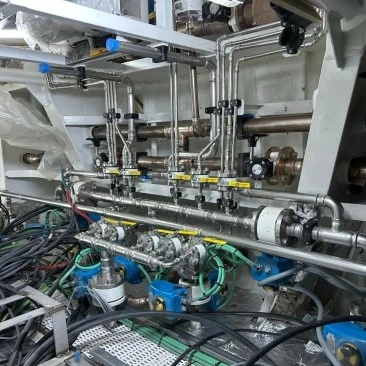
Marine and Shipbuilding
Seawater cooling pipes
Shipboard firemain piping
Bilge and ballast piping
Marine heat exchanger connections
Common Grades: C70600, C71500
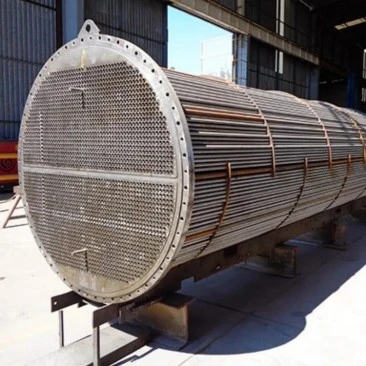
Heat Exchanger Systems
Condenser piping
Shell-and-tube heat exchanger components
Cooling water lines
Industrial heat transfer equipment
Common Grades: C70600, C71500

Desalination Plants
Seawater intake piping
Brine handling lines
Cooling water piping
Corrosion-resistant process piping
Common Grades: C70600, C71500

Power Generation
Condenser water piping
Cooling water systems
Auxiliary seawater piping
Industrial heat exchanger connections
Common Grades: C70600, C71500
Manufacturing Process of ASTM B466 Seamless Copper Nickel Pipes
ASTM B466 seamless copper-nickel pipes are manufactured from cast billets through hot working and subsequent cold working and annealing processes.
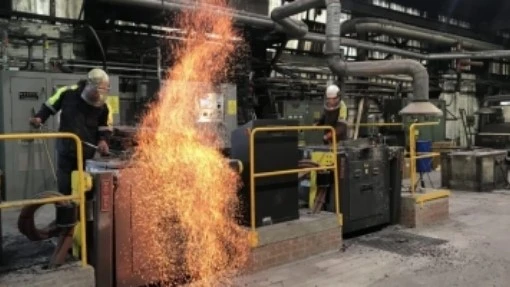
Melting & Casting
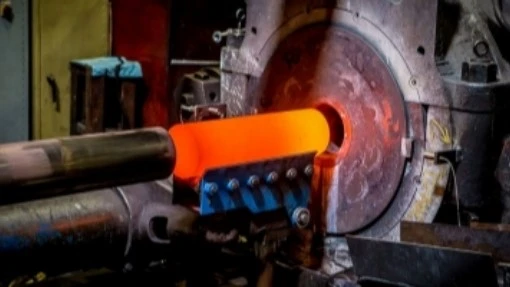
Extrusion Press
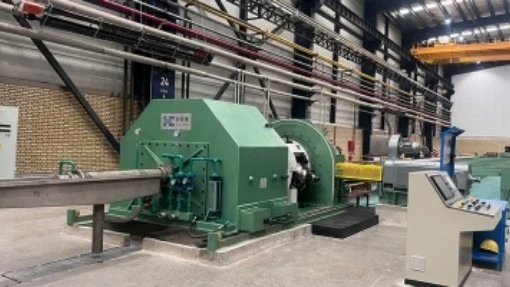
Three-Roll Planetary Rolling Mill
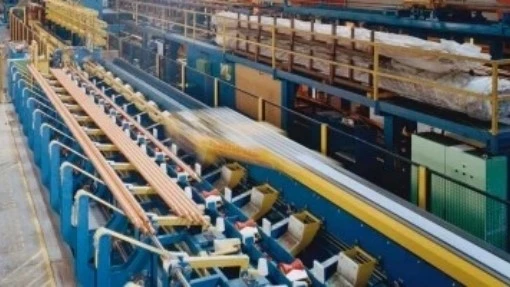
Drawing Line
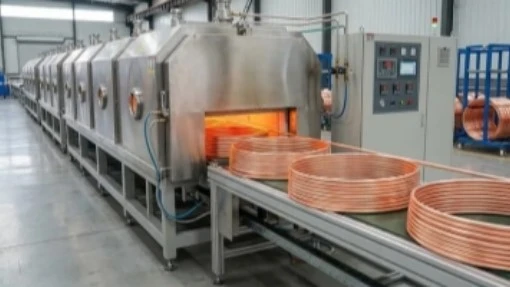
Annealing Furnaces
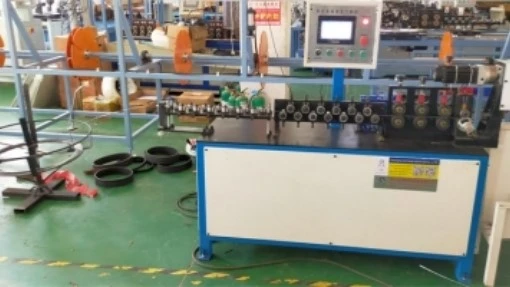
Cutting & Straightening
Raw Material Preparation
Copper and alloying elements are prepared according to the required UNS grade. Chemical composition is controlled to achieve the specified material designation.
Hot Extrusion or Piercing
The cast billet is processed through hot extrusion or piercing to produce a hollow pipe shell.
Cold Working
The hollow product undergoes cold working, such as drawing, to achieve the required dimensions and surface condition.
Annealing
Heat treatment is performed as required to achieve the specified temper and mechanical properties.
Straightening and Cutting
The pipes are straightened and cut to the specified lengths.
Final Inspection
Finished pipes undergo dimensional, mechanical, chemical, and applicable performance testing before packaging.
ASTM B466 Inspection and Testing Requirements
Quality inspection ensures that finished copper-nickel pipes meet the specified material, dimensional, and performance requirements.

Wall Thickness Inspection

Handheld XRF Spectroscopic Composition Analysis

Universal Material Tensile Mechanical Test

Eddy Current Non-Destructive Testing (NDT)
The main inspection and testing items include:
| Inspection / Test | Purpose | Buyer Concern |
|---|---|---|
| Chemical Composition Analysis | Verifies alloy composition | Correct UNS grade |
| Tensile Test | Measures tensile and yield properties | Mechanical compliance |
| Rockwell Hardness Test | Measures material hardness | Required temper |
| Expansion Test | Evaluates resistance to expansion deformation | Material integrity |
| Flattening Test | Evaluates pipe deformation performance | Ductility and soundness |
| Eddy Current Test | Detects relevant discontinuities | Product integrity |
| Dimensional Inspection | Checks OD, wall thickness, and length | Dimensional compliance |
| Visual Inspection | Checks surface condition and visible defects | Product appearance and quality |
The specific tests, sampling frequency, and acceptance criteria depend on the applicable standard requirements, product dimensions, and purchase agreement. Additional inspection can be agreed upon between the buyer and manufacturer.
ASTM B466 Copper Nickel Pipe Packaging
Proper packaging protects copper-nickel pipes during storage, inland transportation, and international shipping.
Packaging should be selected according to pipe dimensions, product quantity, surface condition, and transportation method.
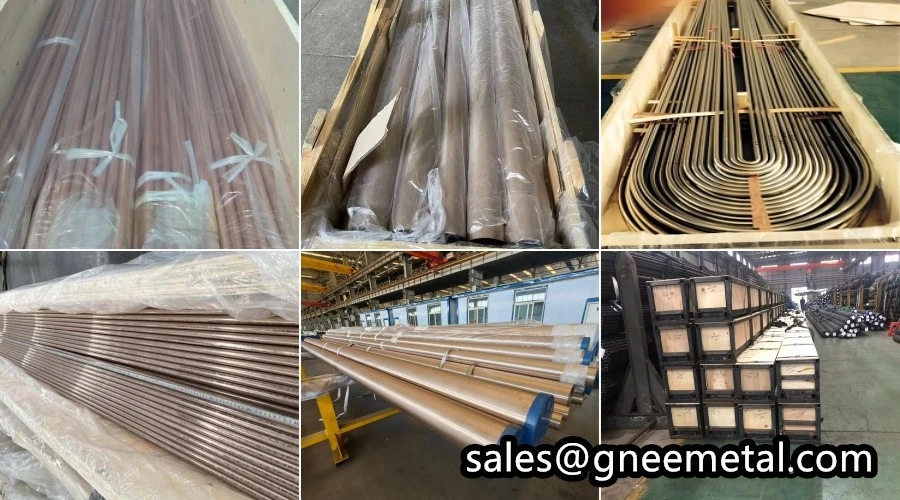
| Packaging Type | Description | Application |
|---|---|---|
| Wooden Crates | Pipes packed in sturdy wooden crates | Export shipments |
| Wooden Boxes | Fully enclosed wooden packaging | Long-distance transportation |
| Steel-Strapped Bundles | Pipes grouped and secured with steel straps and suitable protective separators | Standard pipe shipments |
| Protective End Caps | Plastic or other suitable end protection | Prevents end damage and contamination |
| Plastic Wrapping | Protective wrapping against dust and moisture | Additional surface protection |
ASTM B466 Copper Nickel Pipe Ordering Requirements
When purchasing ASTM B466 seamless copper-nickel pipes, buyers should provide complete technical specifications to avoid misunderstandings during quotation and production.
| Ordering Information | Example / Details |
|---|---|
| Product | Seamless Copper Nickel Pipe |
| ASTM Standard | ASTM B466/B466M |
| Material Grade | C70600 / C71500 |
| Manufacturing Condition | Seamless |
| Temper | Light Drawn / Soft Annealed / Hard Drawn |
| Nominal Pipe Size | 3/4 in, 1 in, 1-1/2 in, 2 in |
| Outside Diameter | Specify in mm or inches |
| Wall Thickness | Actual thickness or specified schedule |
| Length | 20 ft / 6 m / Other specified lengths |
| End Finish | Plain End / Beveled End / NPT Threaded |
| Inspection | Required tests and inspection scope |
| Documents | MTC / EN 10204 3.1 if required |
| Packaging | Wooden crates / Bundles / Export packing |
Send Your Copper Nickel Pipe RFQ
FAQ
Q: What Is ASTM B466 Used For?
A: ASTM B466/B466M specifies requirements for seamless copper-nickel pipes and tubes in straight lengths for general engineering applications. It covers material grades, mechanical properties, manufacturing conditions, dimensions, and testing.
Q: Which Copper Nickel Grades Are Covered by ASTM B466?
A: The standard covers UNS C70400, C70600, C70620, C71000, C71500, C71520, and C72200.
C70600 and C71500 are two commonly specified grades for industrial and marine applications.
Q: What Is the Difference Between ASTM B466 and ASTM B467?
A: ASTM B466 covers seamless copper-nickel pipes and tubes, while ASTM B467 covers welded copper-nickel pipes.
The correct standard should be selected according to the specified manufacturing method and project requirements.
Q: Does ASTM B466 Specify Schedule 40 Dimensions?
A: ASTM B466 establishes product requirements and dimensional tolerances. A Schedule 40 designation should not automatically be assumed to define the applicable dimensions under B466.
Buyers should confirm the actual outside diameter and wall thickness and identify the governing dimensional standard.
Q: Can ASTM B466 Copper Nickel Pipes Be Supplied with NPT Threads?
A: Yes. Threaded ends can be specified as an additional processing requirement, subject to the manufacturer's production capability and agreement.
Buyers should specify the thread standard, pipe size, thread location, and whether one or both ends require threading.
Q: What Is the Difference Between Light Drawn and Annealed Copper Nickel Pipes?
A: Light Drawn pipes undergo cold drawing and generally have higher strength than soft annealed pipes. Annealed pipes have greater ductility and are more suitable for applications requiring additional forming flexibility.
Q: What Documents Are Supplied with ASTM B466 Copper Nickel Pipes?
A: Typical documents include material test certificates, chemical composition results, mechanical test results, dimensional inspection records, and other agreed quality documents.
EN 10204 Type 3.1 certification can be requested when required by the buyer.
Q: How Are ASTM B466 Copper Nickel Pipes Packed for Export?
A: Copper-nickel pipes can be packed in wooden crates, wooden boxes, or secured bundles. End protection, moisture protection, product marking, and ISPM 15-compliant wooden packaging should be considered according to shipping requirements.


