



Copper - Fabrication Techniques, Handling, Storage And Cleaning
Henan Gnee New Material Co., Ltd. is one of the most professional manufacturers and suppliers of copper - fabrication techniques, handling, storage and cleaning in China, specialized in providing high quality copper products with competitive price. Welcome to buy discount copper - fabrication techniques, handling, storage and cleaning for sale here from our factory. Customized orders are welcome.
Copper is well known for its electrical conductivity, but it also has other properties that have been widely exploited in various copper alloys. These alloys have been developed for a variety of applications and used in manufacturing processes to produce a variety of fishing tackle.
Suitable Manufacturing Techniques
Manufacturing techniques that copper alloys are primarily suitable for include machining, forming, stamping, joining, polishing, and plating.
Machinability
Some copper alloys have excellent machinability, which means that easy-to-machine brass sets the standard for the machinability of all other metals.
Handling and Storage of Copper
The handling and storage procedures for copper and copper alloys are very similar to those for aluminum and stainless steel.
Cleanliness
The most important factor is cleanliness. Contaminated copper can be the cause of cracking or porosity during heat treatment or welding. Corrosion resistance can also be adversely affected. Tools and work surfaces should be used exclusively for copper materials or cleaned thoroughly before use. If this rule is not followed, cross contamination can occur.
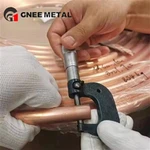
These fabrication methods require specialised, heavy equipment and skilled operators. If fabrication by one of these methods is required, more information should be sought independently.Most copper alloy are relatively soft and can be readily cut using common hand tools and standard cutting methods.While the relative softness of copper makes it easy to cut, it is important to protect the component from unwanted damage during cutting. This damage may include, but not be limited to, bending, denting or scratching.When cutting copper pipe, a fine toothed hacksaw may be used quite successfully. To ensure the cut is square to the pipe, a tube cutter should be used.To hold material for cutting with a hacksaw use a mitre box or a jig consisting of a piece of wood containing a notch to hold the tube or pipe in place.When a pipe cutter is used, it is recommended to grip the copper tubing with a pipe vice or a similar holding device.After cutting the any burrs need to be removed from the inside and outside of the tube. For this, use a half round file. Pipe cutters tend to cause more burrs than do hacksaws.
| Component | Percentage(%) |
|---|---|
| (Cu) | >=99.99% |
| (O) | <=0.002% |
| (Fe) | <=0.004% |
| (Pb) | <=0.002% |
| (Sb) | <=0.0005% |
| (Bi) | <=0.0001% |
| (P) | <=0.002% |
| (S) | <=0.003% |
| (Zn) | <=0.005% |
Hot Tags: copper - fabrication techniques, handling, storage and cleaning, China copper - fabrication techniques, handling, storage and cleaning manufacturers, suppliers, factory, copper, C23000 polished copper bar, copper C12000 rod, UNS C17000 Beryllium Copper Alloys, copper C10200 earth rod, C24000 copper metal rod, C27200 polished copper bar
You Might Also Like



Send Inquiry