

What is purple copper, what is brass and what is the difference between them?
The wide variety of metals in electrical materials and commerce has led to many discussions in the manufacturing industry. These debates are due to the inability of metal users to differentiate between the various metal materials. Especially when the differences are very subtle and when used as conductors of electricity.
An example of two metallic materials that are often mixed together is copper and brass. When the two metals are placed side by side, it can be noticed that copper and brass look somewhat similar. However, there is a slight difference in color and it takes a great deal of expertise to distinguish between the two. In order to avoid using the wrong choices in your project, reading about them can be crucial to a successful project. This article will explain them meticulously in order to determine the difference between purple copper and brass.
First, let's know what brass and purple copper are?
What is purple brass?
Copper (violet brass) was one of the first metals to be discovered, processed, and utilized by humans. This is because copper exists in its natural state. This pure metal was used in prehistoric times to make tools, weapons and decoration. Unlike man-made brass, it is a pure metal that is directly suitable for processing. Copper can be used alone or combined with other alloys and pure metals to form a subset of alloys.
Copper is composed of elements with high electrical and thermal conductivity, and in its purest form it is soft and malleable. It has been used for thousands of years as a building element for other alloys and as a building material.
What is brass?
Brass is a copper alloy that contains a certain amount of zinc. For this reason, this metal is often mistaken for copper. In addition to this, brass consists of other metals such as tin, iron, aluminum, lead, silicon and manganese. The addition of these other metals helps to produce a more unique combination of characteristics. For example, the amount of zinc in brass helps to increase the ductility and strength of the brass matrix copper material. The higher the zinc content in brass, the more flexible the alloy is. Also, depending on the amount of zinc added, it can vary in color from red to yellow.
Brass is mainly used for decorative purposes as it is similar to gold. Apart from that, it is commonly used in musical instrument making due to its durability and workability.
Let's compare 17 differences between brass and purple copper
In this section, we will compare 17 differences between brass and purple copper in detail and then summarize them.
Elemental composition
These two metals can be distinguished based on their elemental composition. As we said earlier, copper is a pure base metal, and it is an element with high electrical conductivity. It has an electronic structure similar to silver and gold. Brass as a metal is an alloy of copper and zinc. Unlike copper, it contains a variety of elemental compositions depending on its alloy form. Common elemental compositions of brass include copper (Cu) and zinc (Zn), which are its main components, but depending on its alloy form, it may have the following compositions.
- Aluminum (Al) - Antimony - Iron (Fe) - Lead (Pb) - Nickel (Ni) - Phosphorus (P) - Silicon (Si) - Sulfur (S) - Tin (Sn)
Corrosion resistance
Corrosion can also be used to differentiate between the two metals. Both metals do not contain iron, so they do not rust easily. Copper oxidizes over a period of time and forms a greenish patina. This prevents further corrosion on the surface of the copper metal. However, brass is an alloy of copper, zinc and other elements that can also resist corrosion. In summary, brass has a more golden color and greater corrosion resistance than copper.
Electrical Conductivity
The differences in electrical conductivity of various metals are often not well understood. However, assuming a material's conductivity because it looks similar to another conductive material of known capacity can be disastrous for a project. This error is more or less obvious in the substitution of brass for copper in electrical applications.
In contrast, copper is the standard for conductivity for most materials. These measurements are expressed in terms of the relative measurements of copper. This means that copper has no electrical resistance; it is 100% conductive in an absolute sense. Brass, on the other hand, is an alloy of copper and is only 28% as conductive as copper.
thermal conductivity
The thermal conductivity of a material is simply a measure of its ability to conduct heat. This thermal conductivity varies from metal to metal and must therefore be taken into account when the material is to be used in a high temperature operating environment. While the thermal conductivity of pure metals remains constant with increasing temperature, the thermal conductivity of alloys increases with increasing temperature. In this case, copper is a pure metal while brass is an alloyed metal. In comparison, copper has the highest electrical conductivity of 223 BTU/(hr-ft . F), while brass has a conductivity of 64 BTU/(hr-ft . F).

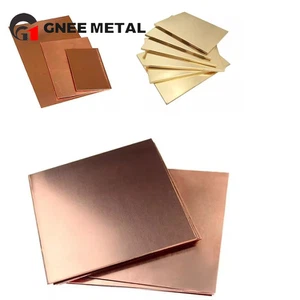

Melting point
The melting point of a metal is critical to the selection of engineering materials. This is because, at the melting point, component failure may occur. When a metallic material reaches its melting point, it changes from a solid to a liquid. At this point, the material can no longer perform its function.
Another reason is that metals are easier to form when they are in the liquid state. This will help in choosing the best formability between copper and brass is a project needs. In the metric system, copper has a maximum melting point of 1084°C (1220°F), while brass has a melting point of 900°C to 940°C. The range of melting points for brass is attributed to the different elemental compositions.
Hardness
The hardness of a material is its ability to resist localized deformation, which may result from indentation by a predetermined geometric indenter in a flat surface of the metal under a predetermined load. Brass as a metal is stronger than copper. In terms of hardness index, brass ranges from 3 to 4. On the other hand, copper has a hardness of 2.5 - 3 on the metal harness chart.Brass is a product of different compositions of copper and zinc. The higher the zinc content, the better the hardness and ductility of brass.
Weight
When comparing the weights of metals, water can be chosen as the baseline for specific gravity - given a value of 1. The specific gravity of the two metals is then compared as a fraction of the heavier or lighter density. After doing so, we find that copper is the heaviest, with a density of 8930 kg/m3. On the other hand, the density of brass varies from 8400 kg/m3 to 8730 kg/m3 depending on its elemental composition.
Durability
The durability of a material is its ability to remain functional without excessive repair or maintenance when faced with normal operational challenges during its half-life. Both metals exhibit nearly the same level of durability in their respective programs. However, copper exhibits the greatest flexibility compared to brass.
Machinability
Machinability of a material refers to its ability to be cut (machined) to achieve an acceptable surface finish. Machining activities include milling, cutting, die casting, etc. Machinability can also be considered in terms of how the material is manufactured. In comparison, brass has a higher machinability than copper. This makes brass ideal for applications that require a great level of formability.
Formability
Copper has exceptional formability, best described by its ability to produce micron-sized wire with minimal soft annealing. In general, the strength of copper alloys (e.g. brass) increases in direct proportion to the nature and amount of cold working. Commonly used forming methods include die casting, bending, drawing and deep drawing. For example, cartridge brass reflects deep-drawing properties. Essentially, copper and brass-copper alloys exhibit exceptional forming properties, but copper is highly flexible compared to brass.


