

Purchasing ASTM B111 C68700 tubes is a significant capital expense. A typical condenser retube can run from $50,000 to over $500,000 depending on size and quantity. Getting the purchase wrong means either overpaying by thousands or installing tubes that fail early.
This article covers the practical aspects of buying C68700 aluminum brass tube - how to evaluate quotes, how many spares to order, when to pay more for quality, and how to avoid common purchasing mistakes.
For current pricing and available sizes, visit the [ASTM B111 C68700] . To compare cost against other alloys, see the [ASTM B111 heat exchanger tubes] page.
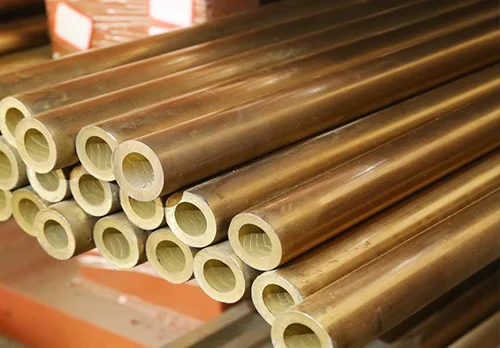
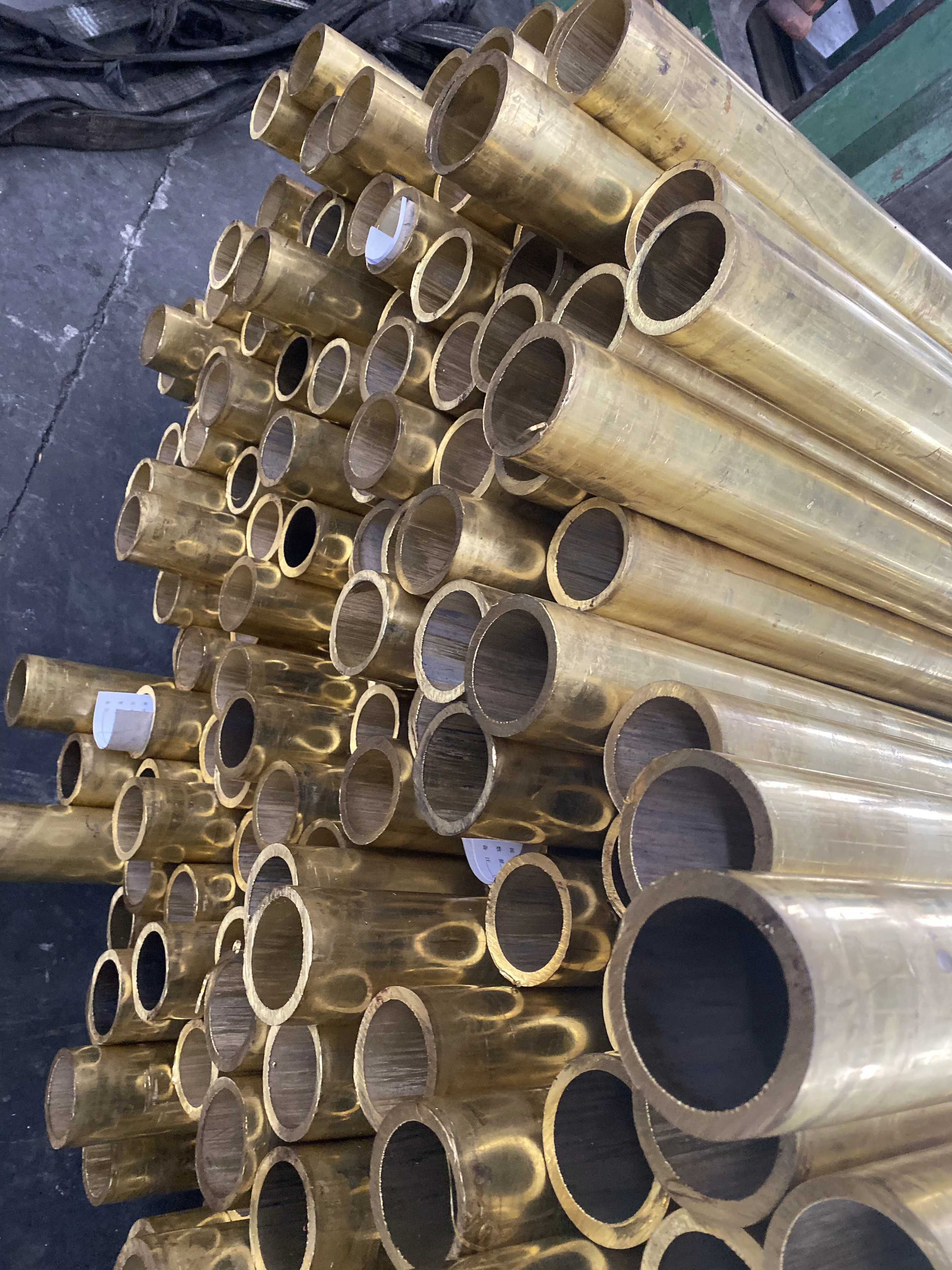
What Factors Actually Determine the Price of C68700 Tubes?
Tube pricing is not random. Several factors drive the final cost per meter.
1. Raw material cost (LME copper price)
C68700 contains approximately 77% copper. The London Metal Exchange (LME) copper price directly affects tube pricing. When copper rises, tube prices rise. No supplier can beat the market on this long-term. A quote that seems too low relative to LME copper should raise questions.
2. Tube dimensions
Larger diameters and thicker walls use more material per meter. The relationship is roughly linear:
| Tube Size | Relative Material per Meter |
|---|---|
| 15.88mm × 20 BWG (5/8" × 0.035") | 1.0x (baseline) |
| 19.05mm × 18 BWG (3/4" × 0.049") | 1.3x |
| 25.40mm × 16 BWG (1" × 0.065") | 2.2x |
3. Order quantity and size standardization
Mills prefer large, consistent production runs. A single order of 50 tons of one size costs less per tube than 5 tons each of ten different sizes. Stock sizes cost less than custom sizes.
How to Compare Quotes From Different Suppliers
Getting multiple quotes is standard practice. But comparing them requires looking beyond the bottom line.
Required information for an apples-to-apples comparison:
| Item | Why It Matters |
|---|---|
| Quantity and length | More tubes = lower per-tube cost |
| OD and wall thickness | Verify same specification |
| Temper (O61 or H55) | O61 is standard; H55 costs more |
| End finish | Deburred vs. as-cut affects installation time |
| Packaging | Basic banding vs. VCI with end caps |
| MTRs | Should be included, not extra |
| Shipping terms | FOB mill vs. delivered to site |
| Payment terms | Net 30 vs. deposit required |
Red flags in a quote:
Price is 20%+ below other quotes with no explanation
MTRs are "extra" or "available upon request"
No specification of wall thickness tolerance (min vs. nominal)
Supplier cannot provide references for similar projects
When Does Paying More for Quality Make Financial Sense?
The lowest-priced tube is not always the most cost-effective over the equipment's life.
Example comparison:
| Option | Upfront Cost | Expected Life | Annualized Cost |
|---|---|---|---|
| Budget tubes (minimum spec) | $50,000 | 10 years | $5,000/year |
| Premium tubes (mid-spec, better QC) | $57,500 (+15%) | 18 years | $3,194/year |
The premium tube costs more upfront but delivers lower annualized cost due to longer life.
Situations where paying more is justified:
Critical service where unplanned outages are costly
Aggressive or corrosive water chemistry
Difficult or expensive tube replacement access
Design life requirement of 20+ years
Situations where price can be the primary factor:
Non-critical service with minimal downtime cost
Clean, benign cooling water
Easy access for replacement
Expected plant life of 5-10 years remaining
Stock Sizes vs. Custom - What Is the Real Cost Difference?
Standardization saves money. Mills run common sizes daily. Custom sizes require production changes.
| Order Type | Price Premium vs. Stock | Typical Lead Time |
|---|---|---|
| Common stock size (19.05mm × 18 BWG) | 0% (baseline) | 1-3 weeks |
| Uncommon OD, standard BWG | +10-20% | 4-6 weeks |
| Fully custom (non-standard OD and wall) | +25-40% | 8-12 weeks |
Before specifying a custom size, consider whether the tubesheet can be redesigned to accept a standard tube OD. A $5,000 tubesheet modification can save $50,000 in custom tube costs.
How Many Spare Tubes Should Be Ordered With a Bundle?
Every tube order should include spares. The question is how many.
Industry spare recommendations:
| Project Type | Spare Percentage | Rationale |
|---|---|---|
| New condenser, experienced installer | 5% | Covers normal installation damage |
| Retube project, average installer | 7-10% | Higher risk of handling damage |
| First-time C68700 installation | 10% | Learning curve with new alloy |
| Remote site (difficult resupply) | 10-15% | No easy way to get more later |
| Critical service with long design life | 10% plus stored spares | Future tube failures expected |
Consequence of insufficient spares: When a tube fails and no spare exists, the only option is plugging. Each plugged tube reduces heat transfer. After 10-15% of tubes are plugged, performance degrades significantly, often leading to early retubing.
What Hidden Costs Should Be Included in a Purchase Comparison?
The quoted price is not the final cost. Several additional expenses should be factored in.
| Cost Category | Typical Range | Notes |
|---|---|---|
| Crating (beyond basic banding) | $500 - $2,000 | Required for export or long-distance shipping |
| Export packaging | $1,000 - $5,000 | For overseas orders |
| Shipping insurance | 1-2% of tube value | Optional but recommended |
| Customs duties | 5-15% | For international purchases |
| Third-party inspection | $2,000 - $10,000 | Optional, depends on project requirements |
| Incoming inspection (internal labor) | $500 - $2,000 | Staff time to measure and document |
| Storage (if received early) | $100 - $500/month | Warehouse space |
Request delivered pricing - tubes on the receiving dock, all costs included. This allows direct comparison between domestic and international suppliers.
FAQ
1. Why do C68700 tubes cost more than C12200?
The price difference comes from two factors. First, C68700 contains 1.8-2.5% aluminum and 0.02-0.06% arsenic - alloying elements that add material cost. Second, aluminum brass is harder to cast, roll, and draw than pure copper, increasing manufacturing cost. For seawater service, the higher upfront cost is justified by much longer service life. C12200 may fail in months; C68700 typically lasts 15-25 years.
2. What is a typical price range for ASTM B111 C68700 tubes?
Exact pricing depends on LME copper prices, which change daily. As a general reference, C68700 typically costs 30-50% more than C12200 for the same size, and 20-30% less than C70600 (90/10 copper-nickel). For current pricing, requesting quotes from multiple suppliers is recommended. Most suppliers update pricing weekly based on LME copper.
3. Are volume discounts available for large orders?
Yes, volume discounts are standard in the tube industry. Typical discount tiers: 5-10 tons → modest discount, 20+ tons → better discount, 50+ tons → best rate (full mill run pricing). For projects under 5 tons, per-tube pricing will be higher because mill setup costs are spread over fewer tubes. Combining orders across multiple sizes or projects can help reach volume discount thresholds.
4. What payment terms are typical for C68700 tube orders?
Standard terms for first-time customers are 30% deposit with order, 70% before shipment. For established customers with approved credit, net 30 days after delivery is common. For large orders exceeding $100,000, letters of credit are sometimes used. Payment in full upfront is not recommended for suppliers without an established track record.
5. How can buyers avoid counterfeit C68700 tubes?
Three verification steps help prevent counterfeit purchases. First, request mill test reports (MTRs) with actual chemistry numbers before payment. Second, verify tube markings on delivery - each tube should be marked "ASTM B111 C68700." Third, work with established suppliers who have been in business for multiple years and can provide references. Prices significantly below market rates are a common red flag for counterfeit material.
6. What is the minimum order quantity for C68700 tubes?
From mills: typically 2-5 tons per size (approximately 2,000-5,000 tubes depending on dimensions). From distributors: as low as 100-500 tubes for common stock sizes. For custom sizes (non-standard OD or wall), larger quantities are required to justify mill tooling changes. Checking with multiple distributors for stock availability is recommended for small quantity needs.
7. How long are tube quotes typically valid?
Most quotes are valid for 7-30 days, but this depends on LME copper price stability. If copper prices change significantly, suppliers may adjust pricing. Some suppliers include a copper escalator clause for quotes extending beyond 30 days. For long-term budgeting, requesting a pricing formula rather than a fixed number is advisable.
100% Inspection Per ASTM B111 / C68700 – Customer Witnessed
Every tube in this lot has passed third-party witnessed inspection per ASTM B111 standard for C68700 alloy. Below are actual photos from customer-onsite inspection, including eddy current testing and dimensional verification.
Inspection items verified:
• Eddy current testing (ECT) – no through-wall defects
• Outer diameter & wall thickness – within ±0.02mm tolerance
• Surface finish & temper (O61) – conforms to ASTM
• Hardness & chemical composition – certified.


Export-Ready Packing – Anti-Rust & Wooden Case
After passing inspection, all tubes are packed according to export standards and customer-specific requirements. The packing process is documented below to ensure traceability and damage-free delivery.
Packing steps shown in video & images:
1. Tube cleaning & drying
2. Plastic end caps on both ends
3. VCI anti-rust paper wrapping
4. Bundle strapping with moisture barrier film
5. Plywood wooden case (ISPM-15 compliant) with foam padding
6. Labeling with ASTM grade, lot number, and inspection stamp


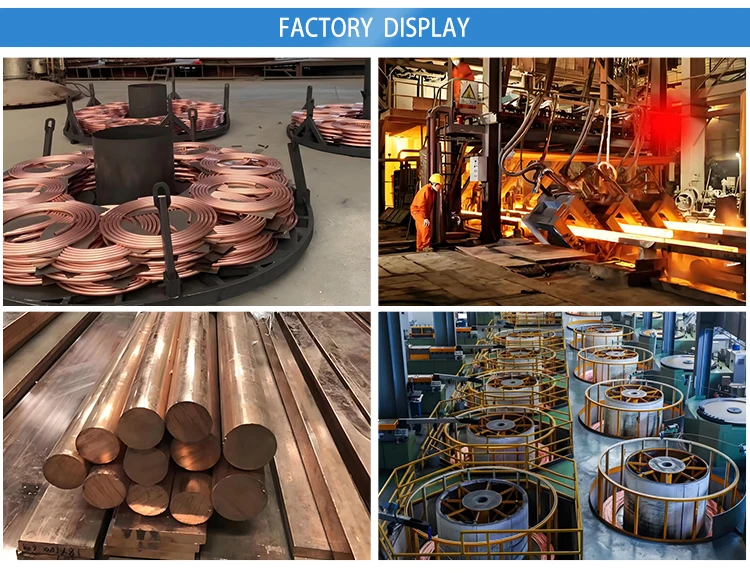
Our Factory & Equipment
All ASTM C68700 tubes are produced and inspected on our in-house equipment, allowing full process control from billet casting to final packing.
Key equipment used for this lot:
• Induction melting furnace – precise alloying (Cu + Zn + Al + As)
• Horizontal continuous casting – uniform billet structure
• Extrusion press (800T / 1630T) – seamless tube forming
• Cold drawing bench (5–40m) – dimensional accuracy to ±0.02mm
• Online eddy current tester (FOERSTER / MAC) – 100% NDT
• Ultrasonic wall thickness gauge – real-time monitoring
• Annealing furnace (controlled atmosphere) – temper O61
In-house metrology: Micrometers, pin gauges, optical comparator, hardness tester (HV/HRB)
All equipment is calibrated quarterly. Production records are traceable by lot number.
Copper & Copper Alloy Products – Supply Range
| Product Form | Common Alloys / Grades | Size Range | Standards | Typical Applications |
|---|---|---|---|---|
| Tube / Pipe | C12200, C11000, C68700, C70600, C71500, C44300, C27000 | OD: 4mm – 219mm Wall: 0.5mm – 20mm Length: up to 15m |
ASTM B68, B75, B111, B280, B359, B466 | Heat exchangers, condensers, HVAC, plumbing, oil coolers |
| Plate / Sheet | C11000, C12200, C26000, C26800, C52100, C68700 | Thk: 0.5mm – 50mm Width: up to 1200mm Length: up to 4000mm |
ASTM B152, B169, B103, B465 | Electrical parts, roofing, gaskets, industrial panels |
| Rod / Bar | C11000, C26000, C36000, C46400, C48500, C63000 | Dia: 3mm – 120mm Length: 1m – 6m (or custom) |
ASTM B16, B124, B138, B150, B453 | Valve stems, shafts, fasteners, machined components |
| Wire | C11000, C16200, C17500, C26000, C52100, C64700 | Dia: 0.1mm – 12mm Coil weight: up to 100kg |
ASTM B1, B2, B3, B197, B206, B624 | Welding electrodes, electrical conductors, springs, mesh |
| Strip / Foil | C11000, C19400, C26000, C26800, C52100, C70250 | Thk: 0.05mm – 3.0mm Width: 5mm – 600mm |
ASTM B36, B465, B694, B888 | Connectors, terminals, battery tabs, shielding, stamping parts |
Check Today's Stock & Lead Time


