

H96 / C21000 Chemical Composition
|
Grade |
Chemical Composition |
||||||
|
QB |
GB/JIS/UNS |
Cu |
Pb |
Zn |
Fe |
Sn |
Total Impurity |
|
H62 |
H62/JIS C2720 |
60.5-63.5 |
<=0.08 |
REM |
<=0.15 |
- |
<=0.5 |
|
H65 |
H65/JIS C2680 |
63.5-68.0 |
<=0.03 |
REM |
<=0.1 |
- |
<=0.3 |
|
H70 |
C2600 |
68.5-71.5 |
<=0.03 |
REM |
<=0.5 |
- |
<=0.1 |
|
H80 |
C2400 |
79-81 |
<=0.03 |
REM |
<=0.5 |
- |
<=0.1 |
|
H90 |
H90 |
88.0-91.0 |
<=0.03 |
REM |
<=0.1 |
- |
<=0.1 |
|
H96 |
H96 |
95.0-97.0 |
<=0.03 |
REM |
<=0.1 |
- |
<=0.2 |
H96 / C21000 Mechanical Properties
|
Mechanical Properties |
|||
|
Grade |
Temper |
Tensile strength |
Elongation(%) |
|
H62 |
Y2(1/2H) |
>=410 |
>=7 |
|
Y(H) |
685-980 |
||
|
H65 |
Y2(1/2H) |
>=400 |
>=7 |
|
Y(H) |
635-885 |
- |
|
|
H68 |
Y2(1/2H) |
>=390 |
>=10 |
|
Y(H) |
685-930 |
- |
|
|
H90 H96 |
Y(H) |
470-800 |
- |
Product Features
High Electrical and Thermal Conductivity: Conductivity close to pure copper (about 90% IACS), suitable for electronic and electrical applications.
Excellent Corrosion Resistance: Strong corrosion resistance in atmospheric and freshwater environments, with no tendency for stress corrosion cracking.
Good Processability: Easy to cold/hot press, supports welding, forging, tin plating, and other processes.
Moderate Strength: The lowest strength among common brass, but higher than pure copper, with tensile strength ≥205-320 MPa.


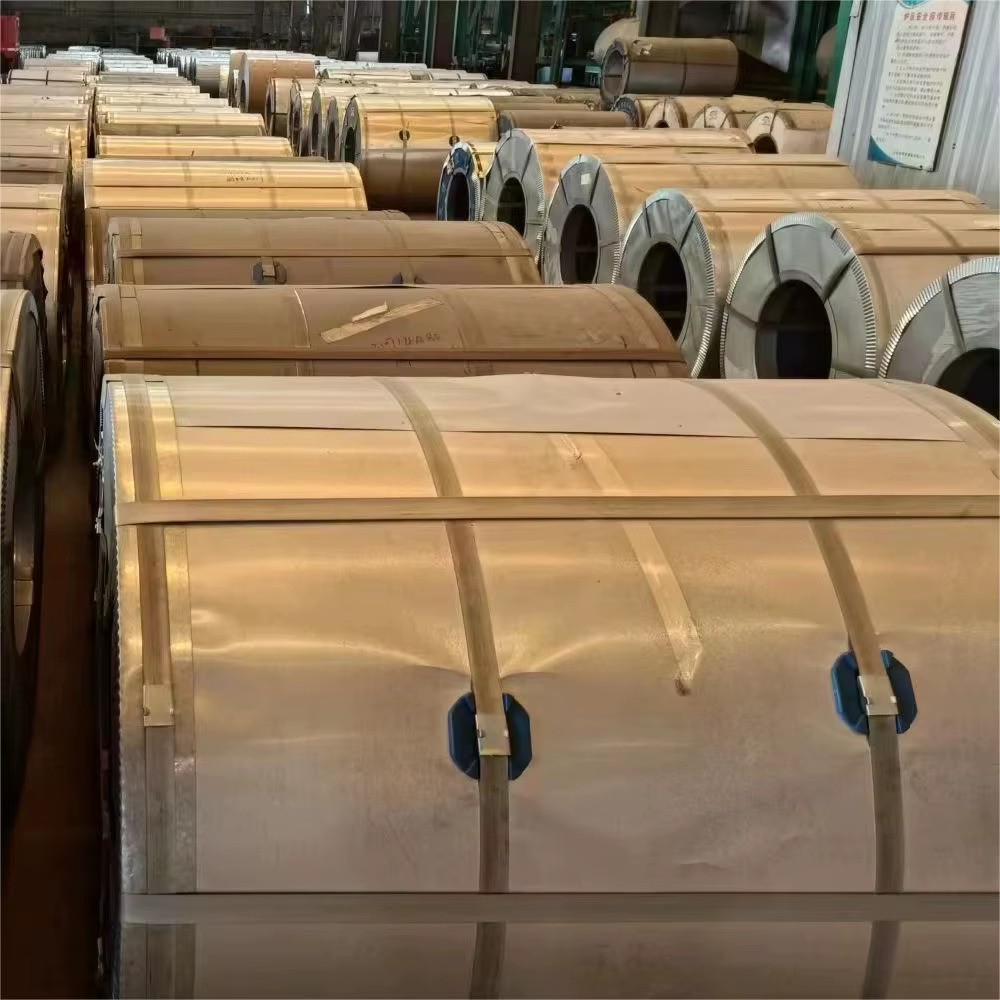
Common Product Forms and Specifications
|
Product Form |
Specification Range |
Delivery Condition |
|
Bar |
Diameter: 4-350mm (Stock covers 6-350mm) |
Bright turned, drawn round, black surface |
|
Plate |
Thickness: 0.3-300mm (Standard 1-150mm) |
Machine-cut plate, forged plate |
|
Strip |
Thickness: 0.1-3.0mm |
M (Soft), Y (Hard) |
|
Tube |
Outer diameter: 3-300mm (Capillary tube outer diameter 1-6.1mm) |
M, Y2, Y, etc. |
|
Wire |
Diameter: 0.1-12.7mm |
Coils or straight rods |
FAQ
| Q: What exactly is H96 material? A: H96 is a copper-zinc alloy (brass) with a nominal composition of 96% copper and 4% zinc. It is known as Gilding Metal 96% or by its UNS number C21000. It is the brass grade with the highest copper content and lowest zinc content. |
| Q: What are the key properties of H96 (C21000) brass? A: Its key properties are: Excellent thermal and electrical conductivity (the highest among common brasses). Very good corrosion resistance (close to pure copper). Good ductility and formability for both cold and hot working. Characteristic reddish-gold color, making it aesthetically pleasing. |
| Q: How does H96 differ from pure copper (like T2/C11000)? A: While very close to pure copper, the small addition of zinc (4%) in H96 provides slightly higher strength, hardness, and wear resistance than pure copper, while retaining most of its conductivity and corrosion resistance. It is often a more cost-effective and durable alternative for many applications. |
| Q: What are the most common applications for H96 brass? A: Common applications include: Waveguides, heat exchanger/condenser tubes, heat sinks, electrical conductivity springs, jewelry, medals, commemorative coins, decorative architectural trim, and nameplates. |
| Q: Can H96 brass be welded or soldered? A: Yes, it has excellent solderability and brazability. However, welding can be challenging due to its high thermal conductivity and zinc content, which can lead to porosity and zinc fume. Specialized techniques (like TIG welding with proper filler metal) are required. |
| Q: What are the main standards that cover H96/C21000? A: It is covered by various international standards: China: GB/T 5231 (H96) USA: ASTM B36 (C21000 for sheet/plate/strip), ASTM B134 (C21000 for wire) Europe: EN CW500L (similar composition) Japan: JIS C2100 |
| Q: Is H96 brass resistant to dezincification? A: Yes, it has very high resistance to dezincification due to its high copper content (above 85%). This makes it suitable for use in certain aqueous environments where lower-copper brasses (like H70, H62) would be susceptible. |
| Q: What is the typical form and size range for H96 products? A: It is commonly supplied as strip/coil, sheet/plate, wire, and tube. Typical dimensions include: Strip/Coil: Thickness 0.1mm - 3.0mm, Width up to 600mm. Wire: Diameter 0.5mm - 12.0mm. Tube: Outer Diameter (OD) 3mm - 50mm. |
| Q: What is the temper (hardness state) available for H96 strip? A: It is commonly available in soft (O), quarter-hard (H01), half-hard (H02), and hard (H04) tempers to suit different forming requirements. |
Our product range
| Category | Other Key Grades (Extensive Range) | Product Forms | Typical Size Range |
|---|---|---|---|
| Pure Copper | T2 (C11000/C10100), TU1/TU2 (Oxygen-Free), T3 (C11000), C10100, C10200 (OF), C10300, C10400, C10500, C10700, C10800, C11000, C11300, C11400, C11500, C11600, C12000, C12200 | Pipe/Tube, Plate/Sheet, Coil/Strip, Wire/Rod, Busbar | Pipe/Tube: OD 3mm - 400mm, WT 0.5mm - 15mm Sheet/Plate/Coil: Thk 0.1mm - 50mm, Width ≤ 1250mm Wire/Rod: Dia. 0.5mm - 80mm |
| Phosphorus Deoxidized Copper | TP2 (C12200), C1201, C1220, C12200, C14200 | Pipe/Tube, Plate/Sheet, Coil/Strip | Pipe/Tube: OD 4mm - 300mm, WT 0.5mm - 10mm Sheet/Plate/Coil: Thk 0.2mm - 30mm, Width ≤ 1000mm |
| Brass | H96, H68, H65, H70, HPb59-1 (C3771), CW505L (C12200), C2600 (Cartridge Brass), C2680, C2720, C28000, C36000 (Free-Cutting), C38500 | Coil/Strip, Plate/Sheet, Rod/Bar, Wire | Strip/Sheet/Coil: Thk 0.05mm - 10.0mm, Width ≤ 650mm Rod/Bar: Dia. 3mm - 200mm Wire: Dia. 0.5mm - 12mm |
| Bronze & Other Alloys | Phosphor Bronze: C51000, C52100, C54400 Copper-Nickel: C71500, C71640 Aluminum Bronze: C60600, C63000 Beryllium Copper: C17200, C17500 Other: C19210, C19400 |
Strip/Coil, Plate, Rod/Bar, Wire, Pipe | Customizable per alloy and form. Strip/Coil: Thk 0.05mm - 5.0mm Rod/Bar: Dia. up to 150mm |


