

What is C70600 copper nickel tube?
C70600, also known as 90/10 copper nickel, is a copper alloy containing approximately 90% copper and 10% nickel, plus small amounts of iron and manganese. It is specifically designed for seawater and brackish water service. The alloy forms a protective oxide film when exposed to clean seawater. This film blocks further corrosion and self‑repairs if damaged. Unlike stainless steel, C70600 also releases copper ions that prevent barnacles and algae from attaching. That is why shipbuilders, power plants, and desalination facilities have used C70600 tube for over 50 years. The material is defined under several ASTM standards, with ASTM B111 being the most common for heat exchanger and condenser tubes.

Marine and shipbuilding applications for C70600 tube
C70600 is the standard tube material for seawater systems on ships. Naval vessels, cargo ships, tankers, and passenger ships all use it. The alloy resists corrosion, prevents marine growth, and lasts for decades.
Common shipboard applications:
| Application | Why C70600 is used |
|---|---|
| Seawater cooling lines | Resists impingement corrosion |
| Ballast water systems | Long life with minimal maintenance |
| Fire fighting mains | Reliable, no pinhole leaks |
| Bilge and stripping lines | Handles both seawater and oil mixtures |
| Sanitary and drain lines | Biofouling resistance |
| Heat exchangers and coolers | Good heat transfer + corrosion resistance |
| Condensers | Standard material for shipboard condensers |

Power plant applications for C70600 tube
Coastal power plants use C70600 condenser tubes almost exclusively. Once‑through seawater cooling requires a material that will not pit or perforate within months. C70600 delivers 20-30 years of service.
| Application | Typical C70600 use |
|---|---|
| Main steam surface condensers | Thousands of tubes per unit |
| Auxiliary coolers | Lube oil coolers, air coolers |
| Pump seal coolers | Small diameter tubes |
| Turbine gland condensers | Low pressure service |
| Heat recovery systems | Moderate temperature |
| Dump condensers | Backup heat rejection |
Why power plants choose C70600:
Predictable long life (20-30 years)
Can be individually retubed during outages
Lower cost than titanium
Accepts rolling into carbon steel tube sheets

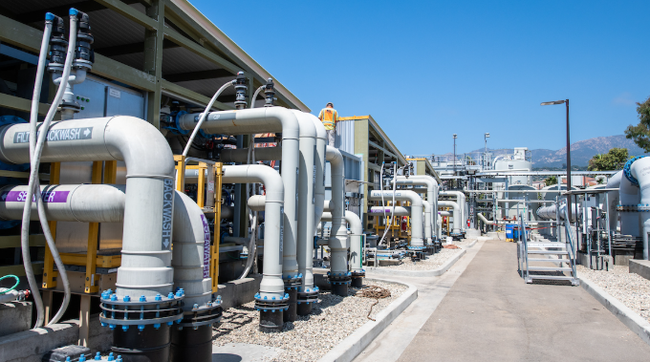
Desalination plant applications for C70600 tube
Desalination plants use C70600 in low temperature multi‑effect distillation (MED) units and evaporators. The alloy resists brine corrosion and prevents scaling.
| Application | Where C70600 fits |
|---|---|
| Heat rejection section | Lower temperature, C70600 works well |
| Evaporator tubes | Brine service |
| Preheater tubes | Before high temperature stages |
| Ejector condensers | Small heat exchangers |
| Brine heaters (lower temp) | Below 60°C service |
Offshore oil and gas applications for C70600 tube
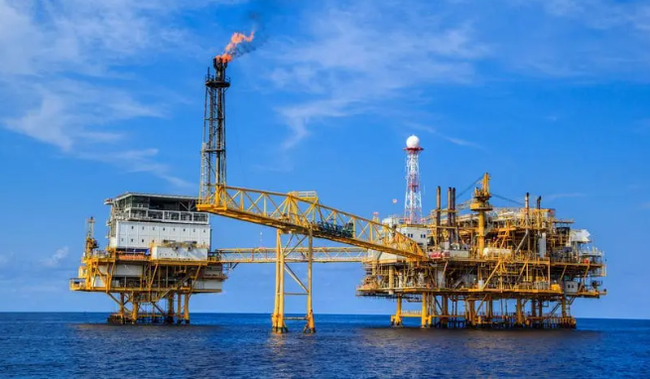
Offshore platforms face some of the most corrosive conditions on earth. C70600 tube is used in topside seawater systems and subsea hydraulics.
| Application | Why C70600 |
|---|---|
| Seawater lift pumps discharge lines | Flowing seawater, high reliability |
| Fire water ring mains | Safety critical, cannot leak |
| Heat exchangers for process cooling | Seawater on tube side |
| Hydraulic control lines (small tube) | Corrosion resistant for subsea |
| Instrument air coolers | Salt air exposure |
| Potable water systems | No taste or toxicity issues |
Heat exchanger and condenser applications for C70600 tube
This is the largest single application for C70600 tube. Thousands of heat exchangers worldwide use C70600 as the tube side material against cooling water.
| Type | Typical service |
|---|---|
| Shell and tube heat exchangers | Seawater or brackish water cooling |
| Plate and frame (tube side) | Less common but possible |
| Marine coolers | Engine jacket water cooling |
| Condensers | Steam condensing with seawater |
| Evaporators | Seawater desalination |
| Coolers for hydraulic systems | Offshore and shipboard |
Why C70600 dominates this space:
Resists both general corrosion and biofouling
Reasonable thermal conductivity (45 W/m·K)
Easy to roll into tube sheets
Tubes can be replaced individually
20-30 year service life

Industrial process applications for C70600 tube
| Application | Condition |
|---|---|
| Chemical plant coolers | Cooling tower or river water |
| Refinery trim coolers | High chlorides |
| Pulp and paper mills | Corrosive bleach plant service |
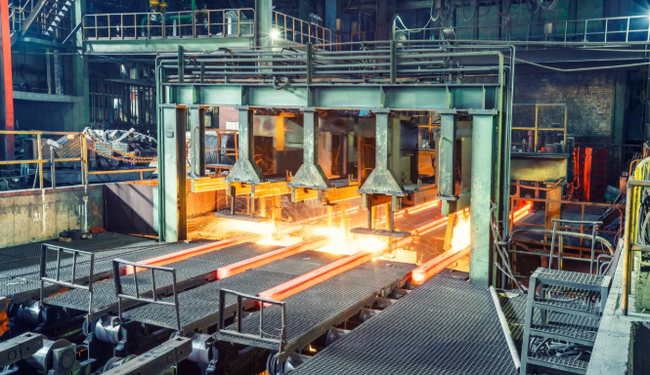
| Steel mill cooling systems | Once‑through industrial water |
| Food processing | Non‑toxic, no taste transfer |
| Pharmaceutical cooling loops | Clean, non‑reactive |
| Hydraulic oil coolers | Any corrosive environment |
FAQ
Q1: What is the most common application for C70600 tube?
Seawater cooled heat exchangers and condensers is the single largest application. Power plants use it for main condensers. Ships use it for engine cooling and ballast systems. Offshore platforms use it for fire water and cooling. Desalination plants use it for evaporators. About 70-80% of all C70600 tube goes into heat transfer equipment where seawater is the cooling medium.
Q2: Is C70600 used in drinking water systems?
Yes, C70600 is approved for potable water service in many countries. Copper nickel alloys release copper ions, which have antimicrobial properties. However, some water authorities require testing to ensure copper levels remain within limits. For shipboard potable water systems, C70600 is common. For municipal drinking water, other materials are more typical.
Q3: Can C70600 be used for buried pipelines?
Yes, but with proper external protection. Buried C70600 pipe needs coating or cathodic protection to prevent external corrosion from soil. Soil can be corrosive to copper alloys depending on resistivity and chemistry. For above‑ground seawater lines, C70600 works bare. For buried service, wrap it or coat it.
Q4: Is C70600 used in the food and beverage industry?
Sometimes, but not as the first choice. C70600 is non‑toxic and does not affect taste. However, the food industry prefers stainless steel for easier cleaning and regulatory familiarity. Some breweries use copper nickel for cooling coils. Most food plants stick with 304 or 316 stainless.
Q5: Does C70600 work for fire protection systems on ships?
Yes, this is one of the standard applications. Naval and commercial ships use C70600 for fire mains and sprinkler lines. The material must work immediately after years of idle service. Copper nickel does not rust internally like carbon steel. No scale blocks the nozzles. Fire water systems are a critical C70600 application.
Q6: Can I use C70600 for compressed air lines on a ship?
Yes, but keep the air dry. Wet compressed air can corrode copper nickel internally over many years. Most ships use copper nickel for compressed air lines because it resists salt air externally. Internally, install a dryer or accept that the line may need replacement after 15-20 years.
Q7: Is C70600 used in renewable energy applications?
Yes, in offshore wind and tidal power. Subsea cooling systems for offshore wind substations use C70600. Tidal turbine hydraulic systems use copper nickel tubing. The renewable marine sector is a growing application area. Corrosion resistance and biofouling prevention are just as valuable here as in oil and gas.
Q8: Does C70600 work for solar thermal systems?
Possible but not common. Solar thermal heat exchangers often use inhibited glycol, not seawater. For fresh water or glycol, cheaper materials like copper (C12200) work fine. Only specify C70600 if your solar thermal system uses seawater or very aggressive water. For most solar thermal, C70600 is overkill.
Q9: Can C70600 tube be used for HVAC systems?
In coastal buildings, yes. HVAC condensers located near the ocean can use C70600 tubes to resist salt air corrosion. Fresh water cooled HVAC does not need C70600. But once‑through seawater cooling for large coastal HVAC systems (e.g., district cooling) should use C70600 or better.
Q10: Is C70600 used in the pharmaceutical industry?
Rarely. Pharmaceuticals prefer stainless steel for cleanability and validated cleaning procedures. Copper nickel is not common in drug manufacturing. However, some utilities (cooling water loops) may use C70600 if seawater cooling is involved. For product contact, stainless steel is the standard.
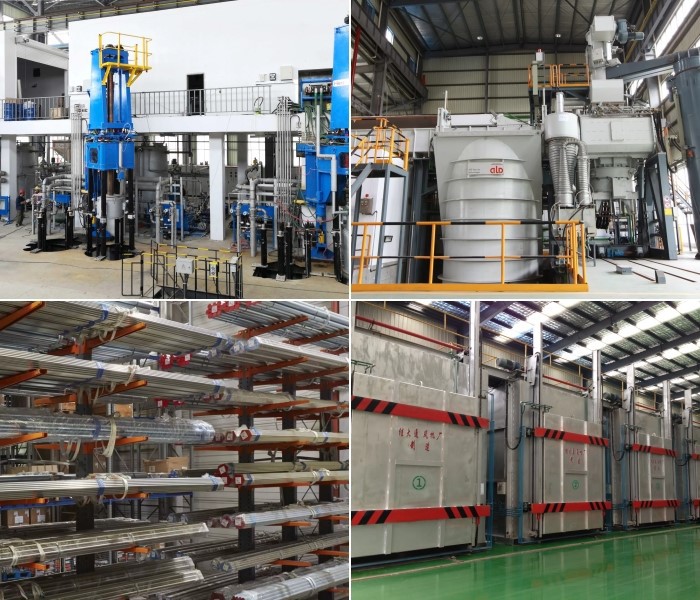
Our Factory Equipment
| Step | Equipment | Output |
|---|---|---|
| 1 | Melting furnace (3 units, 5t each) | Liquid alloy |
| 2 | Continuous caster (2 lines) | Solid billet 80-220mm |
| 3 | Extrusion press (2500T / 3500T) | Hollow shell |
| 4 | Pilger mill (4 units) | Reduced diameter |
| 5 | Drawing bench (8 lines) | Final OD + wall |
| 6 | Annealing furnace (4 units, 600°C) | Soft temper |
| 7 | Straightener + cutter (3 lines) | Cut to length |
Our Product Range
| Category | Shapes | Size | Grades |
|---|---|---|---|
| Tube | Round, square, coil, grooved | OD 3-219mm | C11000, C12200, C70600, C71500, C26000 |
| Rod | Round, hex, square | Dia 2-120mm | C11000, C36000, C14500, C18200 |
| Wire | Round, flat, tinned | Dia 0.1-12mm | C11000, C16200, C17200 |
| Strip | Coiled, slit | Thk 0.05-3mm | C11000, C19400, C70250 |
| Foil | Thin sheet | Thk 0.01-0.1mm | C11000, C10200 |
| CNC parts | Bushings, flanges, nuts | Custom | C36000, C63000, C70600 |
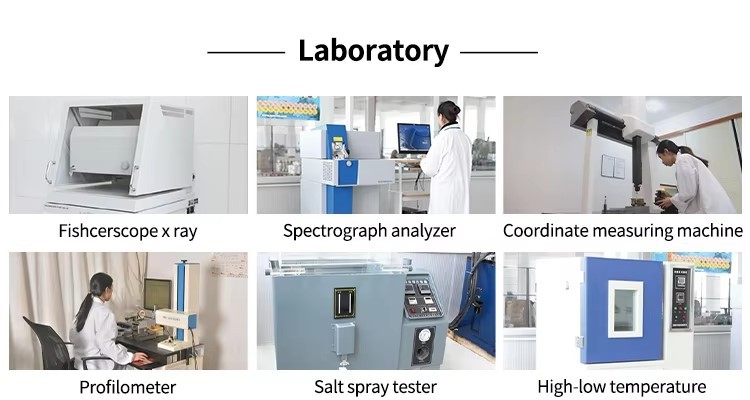
Our Testing
Incoming material
Spectrometer check (ASTM E1473) → Ni 9-11%, Fe 1.0-1.8%
Reject if chemistry is off by more than 0.2%
During production
Laser OD gauge → continuous monitoring, accuracy ±0.01mm
Ultrasonic wall sensor → alarms if wall drifts beyond ±10%
After drawing (sample per heat)
Tensile test → must break above 310 MPa
Flatten test → squeeze flat, no cracks
Flare test → 30° cone, no splits
Before shipping (100% of tubes)
Eddy current test → probe through every tube
Pass only if no signal above reference level
Our Packaging
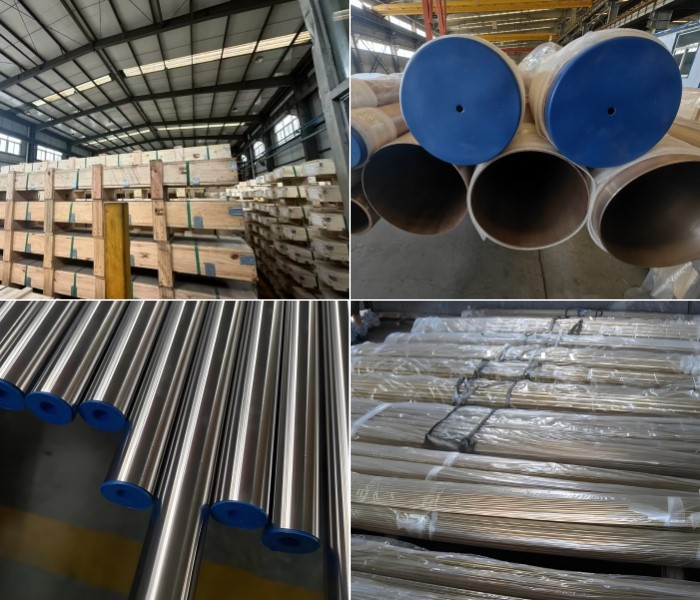
Tube protection
Plastic end caps (both ends)
VCI paper between layers – stops condensation corrosion
Shrink wrap around each bundle – moisture barrier
Bundle securing
Steel straps – 4 to 6 straps per bundle
Wooden case for fragile sizes (small OD or cut lengths)
Steel bundle + wooden pallet for standard 6m tubes
Labeling
Waterproof label on each bundle
Grade, OD, wall, heat number, quantity clearly printed
Shipping
Container loading supervised by our warehouse team
Photos taken before container closes
Discuss Your Project Requirements


