

ASTM B111 C44400 Type K Copper Pipe Material Overview
C44300 Tin Brass (UNS C44300) is a copper-zinc alloy with excellent corrosion resistance, belonging to the Admiralty Brass series under the US ASTM standard. Due to its stable performance in seawater, freshwater, and steam environments, it is widely used in heat exchangers, condensers, and ship piping. Primarily in the form of pipes, this material combines excellent mechanical properties with processability, making it a key material in the marine engineering and chemical industries.
Chemical Composition and Alloy Design of ASTM B111 C44400 Type L Copper
C44300 is based on a copper (Cu) matrix (70.0%-73.0%), with zinc (Zn) as the primary alloying element (the remainder). Tin (Sn) ranges from 0.9%-1.2% and arsenic (As) ranges from 0.02%-0.10%. The addition of Sn significantly improves the alloy's corrosion resistance, particularly inhibiting dezincification corrosion. Trace amounts of As further enhance grain boundary stability, slowing the corrosion process. Furthermore, impurity levels such as lead (Pb) and iron (Fe) are strictly limited (typically Pb ≤ 0.07%) to ensure material purity.


Physical and Mechanical Properties of ASTM B111 C44400 Type L Copper Tubing
Physical Properties
Density: Approximately 8.53 g/cm³, slightly higher than ordinary brass but still lighter than most corrosion-resistant metals. Electrical/Thermal Conductivity: Electrical conductivity is 28% IACS, and thermal conductivity is approximately 109 W/(m·K), making it suitable for applications requiring both electrical conductivity and heat dissipation.
Corrosion Resistance: Excellent corrosion resistance in seawater, freshwater, and chlorine-containing media, with significant resistance to dezincification (passing the ASTM B858 dezincification test). The upper temperature limit for long-term use is approximately 200°C.
Mechanical Properties
Tensile Strength: Approximately 330-380 MPa in the annealed state, reaching 500-600 MPa after cold working.
Elongation: Annealed elongation is ≥40%, maintaining 15%-25% in the cold-rolled state, demonstrating high plasticity.
Hardness: Typical hardness is HB 60-100, adjustable through cold working.
Core Advantages and Applications of ASTM B111 C44400 Type K Copper Pipe
Performance Advantages
Corrosion Resistance: Tin and arsenic synergistically form a dense oxide film, effectively resisting seawater corrosion and stress corrosion cracking. Thermal Efficiency: High thermal conductivity combined with high-temperature steam resistance makes it suitable for heat exchange systems.
Formability: The pipe can be processed through processes such as cold bending and flaring, and its weldability is superior to lead brass (TIG welding or brazing is recommended).
Typical Applications of ASTM B111 C44400 Type K Copper Tubing:
Marine Engineering: Ship condenser tubes, desalination plant piping, and subsea valve assemblies.
Energy and Chemical: Power plant condenser tubes, refinery heat exchanger tubes, and nuclear power plant cooling systems.
Building HVAC: Air conditioning and refrigeration copper tubes, hot water distribution pipes, especially suitable for environments containing chlorine.
Machining and Treatment Key Points for ASTM B111 C44400 Copper Pipe for AC:
Forming Process: The hot rolling temperature is recommended to be controlled between 700-800°C; during cold working, deformation should be controlled (usually ≤50%) to avoid cracking.
Annealing: Intermediate annealing temperature is 650-750°C. A protective atmosphere (such as nitrogen) can prevent surface oxidation. Welding and Joining: Inert gas shielded welding is preferred to avoid arsenic volatilization caused by high temperatures. Silver-based or phosphor-copper brazing filler metals are recommended for brazing.
Surface Treatment: Acid pickling (a mixture of nitric acid and sulfuric acid) can be used to remove the oxide layer, or tin plating can be used to enhance corrosion resistance.
C44300 tin brass tubing, as a "corrosion protector," has become an indispensable material in the marine and energy industries. Its dezincification resistance, achieved through the synergistic effect of tin and arsenic, remains a classic example of brass corrosion-resistant design. However, stricter environmental regulations and the competition from new alloys are driving the industry towards lower-toxicity, higher-performance materials. In the future, through element substitution (such as bismuth and antimony replacing arsenic) or composite coating technologies, derivatives of C44300 are expected to achieve breakthroughs in sustainability and expanded functionality.
why choose us

Professional copper pipe supplier
As a professional enterprise dedicated to global copper product, GNEE Metal deeply recognizes the quality and responsibility embodied in the ASTM B111 standard. This standard not only specifies chemical composition and mechanical properties but also represents a comprehensive quality commitment spanning manufacturing processes to testing and verification. GNEE solemnly assures global customers that every ASTM B111-standard condenser tube and copper alloy tubing we supply will strictly adhere to its requirements for seamless manufacturing, annealing treatment, eddy current testing, and various mechanical performance tests.
Contact us today for a quotation:sales@gneesteel.com
Packaging and shipping
GNEE offers professional packaging for exported copper pipes. First, we apply anti-rust oil and plastic film to prevent oxidation. Then, we securely strap with steel straps and add corner protectors. Finally, we place the pipes on wooden pallets and reinforce them with iron or wooden boxes, ensuring they are moisture-proof and impact-resistant during ocean transport, while facilitating easy loading and unloading. All packaging meets export standards.


Customer visits


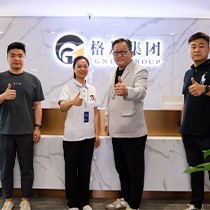


GNEE participated in the exhibition


