Oxygen-Free Copper: Grades, Forms, Compositions, and Properties
Oxygen-free copper materials are classified by the amount of oxygen removed from the base copper material. The two basic grades are:
Cu-OF (C10200) grade copper is oxygen-free up to 99.95%. This grade of copper boasts exceptional purity. While no copper is ever 100% pure, modern technology has allowed refiners to reduce the remaining oxygen content to a practical range of 0.001–0.003%.
Cu-OFE (C10100) grade copper is oxygen-free up to 99.99%. It is purer than Cu-OF and exhibits a slightly higher percentage of electrical conductivity (approximately 1%) and superior corrosion resistance. Additionally, it is often used for high-quality audio/visual systems.
Both grades of oxygen-free copper are available in a wide variety of forms and shapes, including:
Plate
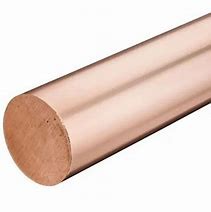
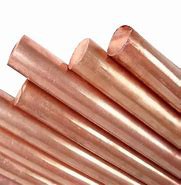
Rod
Sheet
Strip
Tube
Although Cu-OF and Cu-OFE have slightly different compositions due to the .04% variance in residual oxygen level, they share many characteristics. For instance, they both contain the following properties in soft to hard conditions:
Tensile strength of 222–385 N/mm2
Proof strength range (to 0.1% deformation) of 60–325 N/mm2
Elongation of 60-4%
Hardness range of 45–115 HV
Average conductivity of 102% and a guaranteed value of 101% as per IACS
Thermal conductivity ranges between 386–394 W/m°C
Oxygen-Free Copper (OFC) Production
Oxygen-free copper (OFC) is formed via an intensive manufacturing and refining process that includes melting the copper and incorporating gases into the final composition. To prevent distortion and the formation of cracks within the material, manufacturers can add heat treatments to the production process to relieve stress. If the OFC is not softened during the heat treating process, then the manufacturer needs to perform further annealing (tempering) operations on the material to strengthen it.
Applications of Oxygen-Free Copper (OFC)
Oxygen-free copper is highly suitable for a number of industrial applications, including the manufacture of electronic products and products that operate within vacuum conditions. Some of the electronic products for which OFC is used are:
Anodes
Bus conductors
Busbars
Coaxial cables
Glass-to-metal seals
Hollow conductors
Klystrons
Lead-in wires
Medical devices
Rectifiers
Transistor components
Tubes
Vacuum seals & vacuum applications
Waveguides