

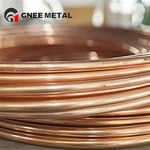
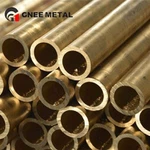
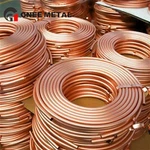



Stranded Wire Vs. Solid Wire in Electrical Applications
Henan Gnee New Material Co., Ltd. is one of the most professional manufacturers and suppliers of stranded wire vs. solid wire in electrical applications in China, specialized in providing high quality copper products with competitive price. Welcome to buy discount stranded wire vs. solid wire in electrical applications for sale here from our factory. Customized orders are welcome.
These tiny strands of wire are compressed and insulated with a non-conductive material. Stranded wire is more flexible, making it ideal for connecting electronic components in tight spaces or twisting and bending to fit complex geometries. Stranded wire is more flexible and ductile than solid wire and will not split or break. It is often used in indoor applications such as electronic devices, circuit boards, and speaker wire.Solid metal core wire is much heavier and thicker than stranded wire. It is ideal for outdoor use where greater durability and higher currents are required. This rugged, low-cost wire withstands weather, extreme environmental conditions, and frequent movement. It is often used to transmit high currents in building infrastructure, vehicle controls, and a variety of outdoor applications.
|
Name |
Solid Copper Wire |
| Brand | GNEE |
Comparing stranded vs. solid wire involves exploring the advantages and disadvantages of the two very different types of wire. A comparison narrows down the choices based on how the specific wire characteristics relate to their expected use and the project requirements. You must first determine your application's requirements for weather resistance, flexibility, and resistance to splitting or severing. Then, choose the wire that most closely meets those needs.
Some key differences of stranded vs. solid copper wire include:
Stranded vs. solid wire current capacity. Solid wire is thicker, which means less surface area for dissipation. The thinner wires in stranded wire contain air gaps and greater surface area with the individual strands, translating to more dissipation. When choosing between solid or stranded wire for house wiring, the solid wire offers higher current capacity.
Routing. Stranded wires offer superior bendability and flexibility, making them easier to route around obstacles than solid wires.
Flexibility. Stranded wires are more flexible and can sustain more vibration and flexing without breaking. Solid wires may require more frequent replacement than stranded wires in applications with significant movement or vibrations.
Cost. The production costs of solid wire are much lower than stranded wire, which makes solid wire the more affordable choice.
Ease of manufacturing. The single-core nature of solid wire makes it much simpler to manufacture. Stranded wires require more complex manufacturing processes to twist the thinner wires together.
Distance. For longer runs, solid wires are the better choice because they feature less current dissipation. Stranded wire will perform well over shorter distances.
Hot Tags: stranded wire vs. solid wire in electrical applications, China stranded wire vs. solid wire in electrical applications manufacturers, suppliers, factory, copper, C12500 copper ground wire, C12000 bare copper cable, grounding wire, bare C27200 copper wire, bare C22000 copper cable, ac C23000 copper wire
Previous
Copper Zinc Alloy WireYou Might Also Like


Send Inquiry