

C21000 vs. C11000
In the spectrum of copper materials, C11000 (Electrolytic Tough Pitch Copper) and C21000 (Commercial Gilding Metal) represent fundamentally different categories-one is essentially pure copper while the other is a carefully engineered alloy. Understanding their distinctions is crucial for applications ranging from electrical systems to architectural elements.
Fundamental Composition & Classification
| Composition Aspect | C11000 (Electrolytic Tough Pitch Copper) | C21000 (Commercial Gilding Metal, 95/5 Brass) |
|---|---|---|
| Copper (Cu) Content | ≥ 99.90% (typically 99.95%+) | 94.0 - 96.0% |
| Primary Alloying Element | Oxygen (0.02-0.05%) for deoxidation | Zinc (4.0-6.0%) |
| Other Elements | ≤ 0.04% total impurities | May contain ≤ 0.05% Pb, ≤ 0.10% Fe |
| UNS Number | C11000 | C21000 |
| Common Names | ETP Copper, Pure Copper | Gilding Metal, 95/5 Brass |
| Material Category | Wrought Copper (Unalloyed) | High-Copper Alloy / Red Brass |
Mechanical & Physical Properties
| Property | C11000 | C21000 | Technical Implication |
|---|---|---|---|
| Tensile Strength (Annealed) | ~ 32 ksi (220 MPa) | ~ 35 ksi (240 MPa) | C21000 offers ~10% higher base strength due to solid solution strengthening from zinc. |
| Yield Strength (Annealed) | ~ 10 ksi (70 MPa) | ~ 12 ksi (80 MPa) | C21000 provides better resistance to permanent deformation. |
| Elongation (Annealed) | ~ 45% | ~ 40% | C11000 is more ductile in the soft condition. |
| Hardness (Rockwell F, Annealed) | ~ 35 HRF | ~ 40 HRF | C21000 is noticeably harder due to alloying. |
| Modulus of Elasticity | ~ 17 x 10⁶ psi (117 GPa) | ~ 18 x 10⁶ psi (124 GPa) | Comparable stiffness; both are quite flexible. |
| Density | 0.323 lb/in³ (8.94 g/cm³) | 0.323 lb/in³ (8.94 g/cm³) | Essentially identical density. |
| Melting Point | ~ 1981°F (1083°C) | ~ 1880-1970°F (1027-1077°C) | C11000 has a higher, sharper melting point. |
| Color | Classic reddish-pink copper | Rich reddish-copper, slightly duller than C11000 | C11000 has the quintessential "pure copper" color that develops a green patina. |
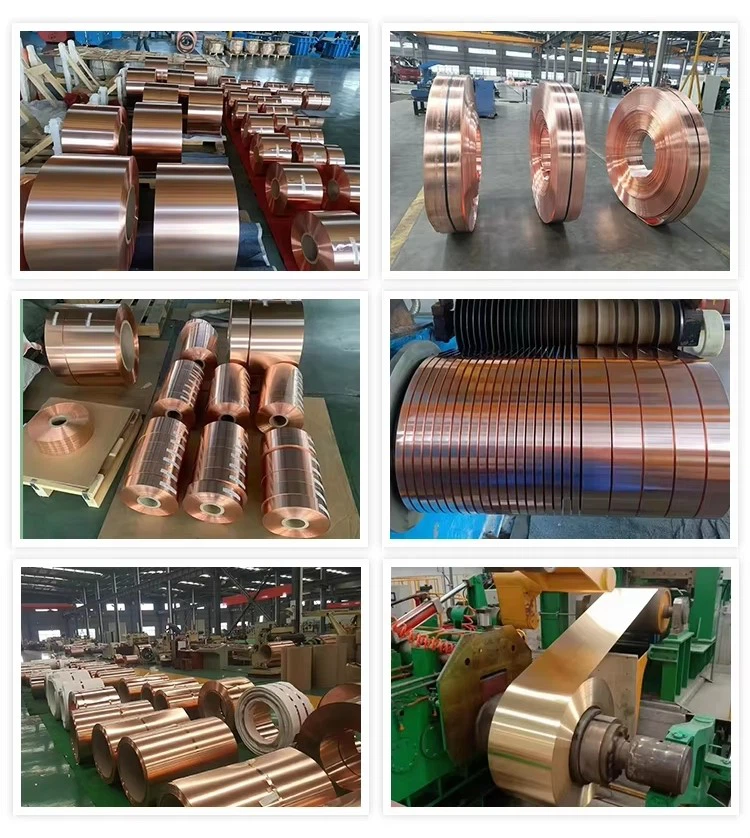
Performance Characteristics
| Performance Factor | C11000 | C21000 | Comparative Analysis |
|---|---|---|---|
| Electrical Conductivity | 101% IACS (Industry Standard) | ~56% IACS | C11000 is vastly superior (nearly twice as conductive). The benchmark for electrical applications. |
| Thermal Conductivity | ~391 W/m·K | ~234 W/m·K | C11000 is far better for heat transfer applications (≈67% higher). |
| Corrosion Resistance | Excellent, but susceptible to hydrogen embrittlement if heated in reducing atmospheres. Forms protective patina. | Excellent, with better resistance to certain corrosive environments than pure copper due to zinc content. | Context-dependent. C11000 excels in atmospheric corrosion; C21000 may resist specific chemicals better. |
| Formability (Cold Work) | Excellent. Extremely ductile and malleable. | Good, but less ductile than pure copper. | C11000 is superior for severe deformation and intricate forming. |
| Machinability | Very Poor (20% of free-cutting brass). Gummy, requires sharp tools. | Poor (20% of free-cutting brass). Similar challenges. | Both are difficult to machine; neither is recommended for high-volume machining operations. |
| Joinability | Excellent soldering/brazing. Cannot be welded in reducing atmospheres (hydrogen embrittlement risk). | Excellent soldering, brazing, and welding. No hydrogen embrittlement concerns. | C21000 wins for weldability. C11000 requires careful atmosphere control for welding. |
| Work Hardening Rate | High. Rapidly strengthens with cold work but requires frequent annealing. | Moderate. More forgiving during forming operations. | C21000 is easier to work with in multi-stage forming processes. |
| Cost Factor | Higher raw material cost (purification premium). | Lower raw material cost (zinc is cheaper than copper). | C21000 is more cost-effective for non-conductive applications. |
Typical Applications
C11000 (ETP Copper) - Where Maximum Conductivity is Paramount:
Electrical Conductors: Busbars, windings, transformers, switchgear, cable sheathing, and electrical connectors.
Thermal Management: Heat sinks, heat exchanger tubes (where corrosion isn't extreme), and cookware.
Roofing & Architecture: Where the traditional copper appearance and patina are desired for long-lasting roofs and decorative elements.
Magnet Wire: For motors and generators requiring optimal electrical efficiency.
Printed Circuit Boards: As conductive traces and layers.
C21000 (Gilding Metal) - The Balanced Performance Choice:
Electrical Springs & Contacts: Where good (not maximum) conductivity combines with better spring properties and wear resistance.
Architectural Metalwork: Gutters, flashings, and decorative trim where a copper appearance is needed with better formability and lower cost than pure copper.
Ammunition Components: Jackets for bullets.
Heat Exchanger Tubes: In moderately corrosive environments where C11000 might be vulnerable.
Coins & Medallions: The "red" portion of bi-metallic coins.
Waveguides & RF Components: Where good conductivity and better strength are needed.
How to Choose
| Your Primary Requirement is... | Recommended Alloy | Rationale |
|---|---|---|
| Maximum Electrical Conductivity | C11000 | The undisputed standard; no practical alloy surpasses it. |
| Maximum Thermal Conductivity | C11000 | Best heat transfer capability available in common metals. |
| The Classic Copper Aesthetic & Patina | C11000 | Provides the authentic, recognizable copper look. |
| Superior Formability / Ductility | C11000 | More malleable and easier to form into complex shapes. |
| Higher Strength & Hardness | C21000 | Zinc addition provides solid solution strengthening. |
| Better Weldability | C21000 | No risk of hydrogen embrittlement; more forgiving to weld. |
| Cost Reduction (Non-Electrical Apps) | C21000 | Significant savings while maintaining a copper-like appearance. |
| Corrosion Resistance in Specific Chemicals | Context-specific | C21000 may outperform in some environments; testing is recommended. |
| Spring Properties in Electrical Components | C21000 | Better elastic modulus and strength for spring applications. |
Product Range of GNEE
| Product Category | Product Forms | Comprehensive Materials & Standards (UNS / Common Names) |
|---|---|---|
| Copper & Copper Alloy Tubes | Round, Square, Rectangular, Capillary, Coiled, Bundles, Straight Lengths | Pure Copper: C10200 (OFE), C11000 (ETP) Brass: C21000 (Gilding 95%), C23000 (Red Brass 85%), C26000 (Cartridge Brass 70/30), C28000 (Muntz Metal 60/40), C44300, C68700 (Arsenical Aluminum Brass) Bronze: C22000 (Commercial Bronze 90%), C38500 (Architectural Bronze) Copper-Nickel: C70600 (90/10), C71500 (70/30) Others: C12000 (DLP), C12200 (DHP) |
| Copper & Copper Alloy Sheets/Plates | Sheets, Plates, Rolls, Circles/Blanks, Embossed, Perforated | Pure Copper: C11000, C10200 Brass: C26000, C26800, C27200 (Yellow Brass 65/35),C21000 Phosphor Bronze: C51000 (A), C52100, C52400 Nickel Silver (German Silver): C75200 (65-18), C77000 (55-18) Beryllium Copper: C17200, C17500 High Copper Alloys: C19400 |
| Copper & Copper Alloy Rods/Bars | Round, Hex, Square, Flat, Rectangular, Forging Billets, Hollow Bars | Free-Cutting Brass: C36000 (CDA 360) Leaded Brass: C38500, C35600 Naval Brass: C46400, C48200, C48500 Bronze: C22000, C51000, C54400 (Free-Cutting Phosphor Bronze) Copper-Nickel: C71000, C71500 Pure Copper: C11000, C10100 |
| Copper & Copper Alloy Wires | Round, Flat, Square, Stranded, Bare, Tin-Plated, Annealed, Hard Drawn | Pure Copper Wire: C11000 (ETP), C10200 (OF) for magnet wire Brass Wire: C26000, C27200, C21000 Beryllium Copper Wire: C17200, C17500 Phosphor Bronze Wire: C51000, C52100 Resistance Welding Wire: C11000, C18200 (Chromium Copper) Spring Wire: Various tempers of C51000, C52100, C17200 |
| Copper & Copper Alloy Strips/Foils | Thin Strip, Foil (down to 0.05mm), Precision Slit Coils, Shim Stock, Finned Strip | Brass Strip: C26000, C26800, C22000,C21000 Phosphor Bronze Strip: C51000, C51900, C52100, C52400 Pure Copper Strip: C11000, C10200, C12000 Nickel Silver Strip: C75200, C77000 Electronic Alloys: C19400 (Lead Frame), C70250, C70350 Special Alloys: C72500 (Cu-Ni-Sn) |
Get the complete product catalog
Copper product packaging
We are committed to providing comprehensive and reliable packaging solutions for your shipments. For standard products, we employ industrial-grade packaging: copper tubes are lined with moisture-proof paper and packed in sturdy wooden cases or secured with iron strapping; sheets, strips, and foils are sealed with waterproof plastic film, placed on wooden pallets, and reinforced with steel straps; rods and wires are bundled with anti-rust protection. All packaging is designed to withstand long-distance sea freight and multimodal transportation. We also offer customized services such as logo printing, vacuum packaging, or special inner lining protection upon request, ensuring the products arrive in perfect condition.


