



C11000 Electrolytic Tough Pitch ETP Copper
Henan Gnee New Material Co., Ltd. is one of the most professional manufacturers and suppliers of c11000 electrolytic tough pitch etp copper in China, specialized in providing high quality copper products with competitive price. Welcome to buy discount c11000 electrolytic tough pitch etp copper for sale here from our factory. Customized orders are welcome.
C11000 Copper, also known as electrolytic tough pitch (ETP) copper, is widely used in electrical and industrial applications due to its superior conductivity, excellent malleability, and corrosion resistance. Known for its high purity (99.9% minimum copper content), C11000 Copper is valued in sectors requiring minimal electrical loss and robust performance.
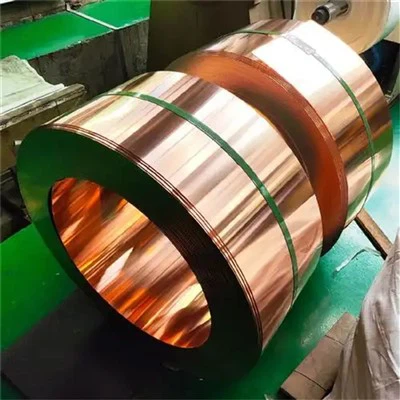
At GNEE COPPER, we provide high-quality C11000 Copper in various forms such as sheets, plates, tubes, pipes, bars, angles, channels, beams, and fittings, catering to a wide range of industry needs.
What is C11000 material standard?
C11000 Electrolytic Tough Pitch (ETP) Copper is known for its high electrical and thermal conductivity, good corrosion resistance and solderability. C11000 copper is used for welding fixtures, anodes, bus bar in electrical power installations, ground straps, commutators and current-carrying hardware. Its properties define what most people consider "pure copper."
Copper 110, also known as UNS C11000 and CDA 110, is Electrolytic Tough Pitch (ETP) Copper, containing 99.99% copper. Copper Alloy 110 is available in various shapes, including round, square, flat, sheet, and plate. Its excellent mechanical properties make Cu-ETP versatile for use as CNC machined copper parts in various applications, especially electrical equipment and products such as cables, overhead line conductors, generator windings, and coaxial lines due to its high conductivity.
Key Features of C11000 Copper
1. High Electrical Conductivity
Primary Feature: C11000 has the highest electrical conductivity of all commercial coppers (second only to silver among pure metals).
Standard: Rated at 100% IACS (International Annealed Copper Standard) for the annealed condition, making it the benchmark for conductivity.
Application: This makes it the material of choice for electrical conductors-busbars, wire, cables, windings, and electrical components.
2. High Thermal Conductivity
Closely linked to electrical conductivity, it also has excellent heat transfer capability.
Application: Essential for heat exchangers, radiators, heating vessels, and other thermal management systems.
3. Excellent Formability and Ductility
Can be extensively cold worked (rolled, drawn, bent) without cracking.
Can be annealed (heat treated) to restore softness and ductility after hardening from cold work.
Application: Ideal for forming into complex shapes, deep drawing, and wire drawing.
4. Good Corrosion Resistance
Resists atmospheric corrosion, forming a protective green patina (verdigris) over time.
Resists freshwater, steam, and many chemicals, though it is not suitable for oxidizing acids, ammonia, or sulfurous environments.
Application: Widely used in plumbing, roofing, and architectural applications.
5. Good Solderability, Brazability, and Weldability
Easily joined using common techniques like soft soldering, brazing, and gas-shielded arc welding.
6. Non-Magnetic and Non-Sparking
An important safety feature in explosive or sensitive electronic environments.
Characteristic Microstructure & The "Tough Pitch"
The name "Tough Pitch" refers to its controlled oxygen content (~0.02% to 0.04%).
This oxygen binds with impurities and forms a dispersed phase of cuprous oxide (Cu₂O) within the copper matrix.
Benefit: The oxide particles improve the material's hot workability and provide a unique combination of strength and ductility not found in oxygen-free coppers.
Key Limitation: Hydrogen Embrittlement
This is the most critical weakness of C11000.
If exposed to a hydrogen-containing atmosphere (e.g., during brazing or annealing), hydrogen can diffuse into the copper and react with internal cuprous oxide (Cu₂O), forming steam (H₂O).
This reaction creates high-pressure pockets within the metal, leading to micro-cracks and severe embrittlement-a phenomenon known as "gassing."
Solution: For applications involving high-temperature reducing atmospheres, Oxygen-Free Coppers (C10100, C10200) must be used instead.
Common Applications
Electrical Conductors: Power cables, magnet wire, busbars, transformer windings.
Electronics: Printed circuit boards, lead frames, connectors.
Building Construction: Plumbing pipes, tubing, roofing, flashing, gutters.
Heat Transfer Equipment: Heat exchangers, radiators, evaporator coils, solar panels.
Industrial: Fasteners, forgings, chemical processing vessels.
Product Specifications for C11000 Copper
| Product Type | Standard | Available Sizes | Typical Applications |
|---|---|---|---|
| Sheets and Plates | ASTM B152 | Thickness: 0.5mm–50mm, Width: up to 1500mm, Length: up to 3000mm | Electrical equipment, roofing, cladding |
| Pipes and Tubes | ASTM B42, B188 | Diameter: 6mm–500mm, Length: up to 6m | Plumbing, HVAC, industrial piping |
| Bars and Rods | ASTM B187 | Diameter: 3mm–200mm | Electrical components, fasteners |
| Angles and Channels | ASTM B152 | Custom sizes available | Structural supports, electrical frames |
| Beams | ASTM B152 | Custom configurations available | Construction, electrical supports |
| Fittings | ASTM B16, B61 | Standard and custom sizes | Connectors, industrial installations |
Physical Properties of C11000 Copper
| Property | Value |
|---|---|
| Density | 8.94 g/cm³ |
| Modulus of Elasticity | 110-130 GPa |
| Melting Point | 1083°C |
| Thermal Expansion | 16.5 µm/m-°C |
| Thermal Conductivity | 401 W/m-K |
| Electrical Resistivity | 1.724 x 10^-8 Ω·m |
Mechanical Properties of C11000 Copper
| Property | Value (Annealed) | Value (Half Hard) |
|---|---|---|
| Tensile Strength | 210 MPa | 250 MPa |
| Yield Strength | 69 MPa | 186 MPa |
| Elongation | 45% | 12% |
| Hardness (Brinell) | 50 HB | 80 HB |
Electrical Properties of C11000 Copper
| Electrical Property | Value |
|---|---|
| Electrical Conductivity | 101% IACS |
| Electrical Resistivity | 1.724 x 10^-8 Ω·m |
Thermal Properties of C11000 Copper
| Thermal Property | Value |
|---|---|
| Thermal Conductivity | 401 W/m-K |
| Specific Heat Capacity | 0.385 J/g-K |
| Thermal Expansion | 16.5 µm/m-°C |
Processing Properties of C11000 Copper
| Process | Suitability |
|---|---|
| Machining | Excellent |
| Welding | Good |
| Forming | Excellent |
| Annealing | Suitable |
Component Elements Properties of C11000 Copper
| Element | Percentage (%) |
|---|---|
| Copper (Cu) | 99.9% minimum |
| Oxygen (O) | 0.02-0.04% |
Comparison: C11000 Copper vs. Other Copper Alloys
| Material | Electrical Conductivity | Corrosion Resistance | Applications |
|---|---|---|---|
| C11000 Copper | Very High (101% IACS) | Excellent | Electrical, industrial components |
| C12200 Copper (DHP) | High (97% IACS) | Excellent | Plumbing, HVAC, heat exchangers |
| C10200 Copper (Oxygen-Free) | Very High (101% IACS) | Superior | High-precision electronic components |
Price List for C11000 Copper (in USD per kg)
| Product Type | Price Range (USD/kg) |
|---|---|
| C11000 Copper Sheets & Plates | $8.0 – $9.5 |
| C11000 Copper Pipes & Tubes | $9.0 – $11.0 |
| C11000 Copper Bars & Rods | $8.5 – $10.0 |
| C11000 Copper Angles & Channels | $9.0 – $10.5 |
| C11000 Copper Beams | $10.0 – $12.0 |
c11000 copper hardness
The hardness of C11000 copper is not a single fixed value but a range that depends heavily on its temper condition (the degree of cold working or annealing).
Hardness by Temper Condition
| Temper Name (ASTM Standard) | Description | Typical Hardness Range | Key Characteristics | |
|---|---|---|---|---|
| O60 (Annealed) | Soft, fully recrystallized | HRB: 35 - 55 | Maximum ductility & formability, minimum strength/springback. | |
| H00 (1/8 Hard) | Slightly cold worked | HRB: 50 - 65 | A good balance, often used for bending. | |
| H01 (1/4 Hard) | HRB: 65 - 75 | |||
| H02 (1/2 Hard) | Moderately cold worked | HRB: 70 - 85 | Common for springs, contacts, and applications needing higher strength. | |
| H03 (Hard) | HRF: 70 - 85 | |||
| H04 (Extra Hard) | Heavily cold worked | HRF: 80 - 92+ | Maximum strength & spring temper, minimal ductility. | |
| H58 (Spring) | Very heavily cold worked | HRF: 90+ | Highest strength & hardness, least ductility. |
Typical Hardness Values (Approximate Averages)
- Annealed (O60): ~ 45 HRB or 55 HV
- Half-Hard (H02): ~ 80 HRB or 105 HV
- Hard (H04): ~ 85 HRF or 115 HV
- Spring (H58): ~ 92 HRF or 130+ HV
c11000 copper density
The density of C11000 (ETP) Copper is 8.94 g/cm³ at 20°C.
This is often rounded to 8.95 g/cm³ or 0.323 lb/in³ in many engineering and industry references.
Compared to Others:
Oxygen-Free Copper (C10100): ~8.94 g/cm³ (effectively the same).
Brass (C26000, 70/30): ~8.53 g/cm³ (lighter due to zinc).
Aluminum 6061: 2.70 g/cm³ (copper is ~3.3x denser).
c11OO0 copper data sheet
Equivalent Alloy Specifications
| Specification | UNS | BSI | JIS | ISO |
| Designation |
C11000 |
C101 |
C 1100 |
Cu-ETP |
Australian Product Specifications
| Specification | Product Form |
|
AS1566 |
Rolled flat products |
|
AS1567 |
Wrought rods, bars & sections |
|
AS1568 |
Forging stock & forgings |
|
AS1569 |
Seamless tubes for heat exchangers |
|
AS1571 |
Seamless tubes for air conditioning & refrigeration |
|
AS1572 |
Seamless tubes for engineering purposes |
Other product specifications available on enquiry
ASTM Product Specifications
| Number | Title |
| B5 |
High Conductivity Tough Pitch Copper Refinery Shapes |
| B124 |
Copper and Copper Alloy Forging Rod, Bar and Shapes |
| B152 |
Copper Sheet, Strip, Plate, and Rolled Bar |
| B187 |
Copper Bar, Bus Bar, Rod and Shapes |
| B188 |
Seamless Copper Bus Pipe and Tube |
| B283 |
Copper and Copper Alloy Die Forgings (Hot Pressed) |
| B447 |
Welded Copper Tube |
| B577 |
Detection of cuprous Oxide (Hydrogen Embrittlement Susceptibility) in copper |
| B694 |
Copper, Copper Alloy and Copper Clad Stainless Steel (CCS) and Copper Clad Alloy Steel (CAS) and Strip for Electrical Cable Shielding |


c11000 copper bar
Standard Shapes & Sizes
Round Bar: Diameters typically from 1/8" (3mm) up to 12" (305mm) or more.
Square Bar: Common sizes from 1/8" x 1/8" up to 4" x 4".
Rectangular Bar (Flat Bar): Thickness from 1/16" up to several inches, widths from 1/2" to 12"+.
Hexagonal Bar: Less common, but available for specific fastener or machining applications.
1. OFHC/OFE C101 / C102 Round Bar
Material: Oxygen-Free High Conductivity (C10100) / Oxygen-Free (C10200) Copper.
Form: Round solid bar.
Key Feature: Ultra-high purity (≥99.99% Cu) with virtually no oxygen (<0.001%).
Why it's Special: Immune to hydrogen embrittlement. Does not contain cuprous oxide, so it won't crack when heated in reducing atmospheres (e.g., brazing, furnace work).
Typical Use: Critical vacuum electronics (tubes, microwave devices), aerospace components, high-reliability brazed assemblies, targets for sputtering, and superconductor stabilizers.
2. ETP C110 Round Bar & Square Bar
Material: Electrolytic Tough Pitch Copper (C11000).
Form: Round and square solid bars.
Key Feature: The standard, most economical industrial copper with 100% IACS conductivity.
Why it's Special: Best balance of conductivity, formability, and cost. Can be supplied in various tempers (annealed to hard).
Typical Use: General-purpose machined electrical components, busbars (from square bar), grounding rods, decorative metalwork, and forgings. Not for high-temp hydrogen environments.
3. ETP C110 Square Edge Bus Bar & Round Edge Bus Bar
Material: Electrolytic Tough Pitch Copper (C11000).
Form: Rectangular flat bar specifically marketed for electrical power distribution.
Square Edge: Sharp 90° corners. Maximizes cross-sectional area (and current capacity) for a given dimension.
Round Edge/Full-Round Edge: Corners are rounded for safety (reduces risk of cuts, corona discharge) and easier handling.
Key Feature: Engineered for high-current, low-impedance power transfer.
Typical Use: Main power distribution in switchgear, panelboards, substations, data centers, and battery packs. Round edge is preferred in most modern installations.
4. Tellurium Copper C145 Round Bar
Material: C14500 (Copper with 0.4-0.7% Tellurium).
Form: Round solid bar.
Key Feature: Excellent machinability (rated 90% on the C360 free-cutting brass scale) while retaining ~95% IACS conductivity.
Why it's Special: Tellurium forms tellurides that break up chips, making it far less "gummy" than pure copper. Allows for high-speed machining, better surface finishes, and longer tool life.
Typical Use: High-volume screw machine parts like electrical connectors, plumbing fittings, nuts, and bolts where both conductivity and machinability are needed.
5. Beryllium Copper C172 / C173 Round Bar
Material: C17200 (Be-Cu, ~1.9% Be) / C17300 (Be-Cu with added lead for even better machinability).
Form: Round solid bar.
Key Feature: A precipitation-hardenable alloy achieving the highest strength of any copper alloy (up to 200 ksi/1380 MPa tensile).
Why it's Special: Can be supplied in solution annealed form (soft, formable) and later heat-treated to achieve extreme strength, hardness, and fatigue resistance, while maintaining good conductivity (~22% IACS) and being non-sparking.
Typical Use: Critical springs, diaphragms, bearings, and connectors in aerospace, oil & gas (non-sparking tools), and high-reliability electronics. C173 is chosen for complex machined parts.
6. C18200 Chromium Copper Round Bar
Material: C18200 (Copper with ~1% Chromium).
Form: Round solid bar.
Key Feature: A precipitation-hardenable alloy that combines high strength and good conductivity (~80% IACS).
Why it's Special: Can be heat-treated after forming. Offers excellent wear resistance, thermal stability, and resistance to softening at elevated temperatures compared to pure copper.
Typical Use: Resistance welding electrodes (spot/seam welding caps and tips), mold inserts for plastic injection molding, high-strength electrical switches, and thermally demanding fixtures.
Quick Selection Guide
| Need... | Choose... |
|---|---|
| Best conductivity, general use, lowest cost | ETP C110 |
| Brazing or high-temp work without failure risk | OFHC C101/C102 |
| Easy, fast machining of intricate parts | Tellurium Copper C145 |
| Extreme strength, fatigue resistance, non-sparking | Beryllium Copper C172/C173 |
| High strength + high conductivity + heat resistance | Chromium Copper C182 |
| A safe, efficient bar to carry thousands of amps | ETP C110 Bus Bar (Round Edge) |


Hot Tags: c11000 electrolytic tough pitch etp copper, China c11000 electrolytic tough pitch etp copper manufacturers, suppliers, factory, copper, C11000 Copper Strip For Earthing, c11000 copper foil roll, C12000 copper strip for earthing, C27200 copper strip, Copper Alloy Strip, C12000 copper foil roll
You Might Also Like




Send Inquiry