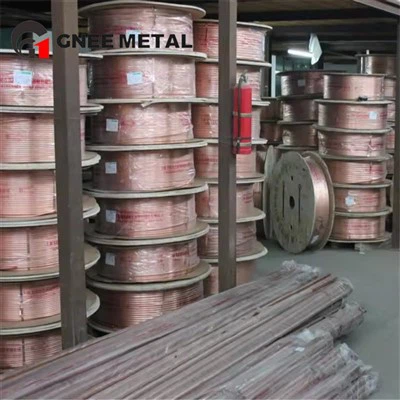
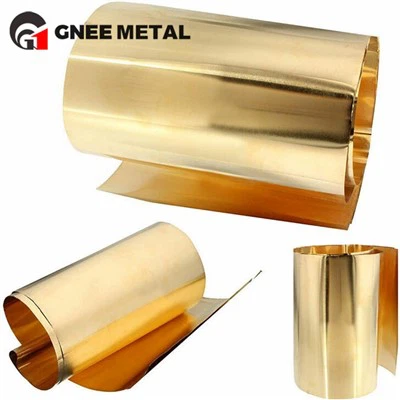
Yo, what's up everyone! I'm a supplier of dead soft copper, and today I wanna talk about the Young's modulus of dead soft copper.
First off, let's break down what the Young's modulus actually is. It's a measure of a material's stiffness or elasticity. In simple terms, it tells us how much a material will stretch or compress when a force is applied to it. The higher the Young's modulus, the stiffer the material.
Now, when it comes to dead soft copper, it's known for being super malleable and ductile. That means it can be easily shaped and formed without breaking. But what about its Young's modulus? Well, the Young's modulus of dead soft copper typically ranges from about 110 to 120 gigapascals (GPa). This value can vary a bit depending on factors like the purity of the copper and how it's been processed.
One of the reasons dead soft copper is so popular is because of its excellent electrical conductivity. It's used in a wide range of applications, from electrical wiring to electronics. And the fact that it has a relatively low Young's modulus makes it easier to work with compared to some other metals.
For example, if you're looking for a flexible copper wire, you might be interested in our Flexible C63300 Copper Wire. This wire is made from high-quality dead soft copper and is perfect for applications where flexibility is key.


Another great option is our C28000 Copper Wire For Earthing High Strength. This wire is designed for earthing applications and has high strength, thanks to the properties of the dead soft copper it's made from.
And if you need a bare copper wire, our Bare C94300 Copper Wire is a great choice. It's made from dead soft copper and is ideal for a variety of electrical and industrial applications.
So, why does the Young's modulus matter? Well, if you're using dead soft copper in a project, understanding its Young's modulus can help you determine how it will behave under different loads. For instance, if you're designing a structure that needs to withstand a certain amount of stress, you'll want to make sure the copper you're using has the right Young's modulus for the job.
In addition to its mechanical properties, dead soft copper also has good corrosion resistance. This makes it a great choice for applications where the material will be exposed to the elements.
When it comes to working with dead soft copper, it's important to use the right tools and techniques. Because of its malleability, it can be easily bent and shaped, but you need to be careful not to overdo it. Using proper bending and forming tools can help ensure that you get the best results.
Another thing to keep in mind is that the Young's modulus can be affected by temperature. As the temperature increases, the Young's modulus of copper generally decreases. This means that in high-temperature applications, you may need to take this into account when designing your project.
So, there you have it - a quick overview of the Young's modulus of dead soft copper. If you're in the market for high-quality dead soft copper products, we've got you covered. Whether you need flexible wires, high-strength wires, or bare copper wires, we have a wide range of options to choose from.
If you're interested in learning more about our products or have any questions, feel free to reach out. We're here to help you find the right copper solution for your needs. Let's start a conversation and see how we can work together to make your project a success.
References:
- "Materials Science and Engineering: An Introduction" by William D. Callister, Jr. and David G. Rethwisch
- Various industry publications on copper properties and applications